Spiral
Program: Spiral.
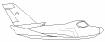
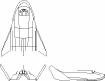
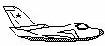
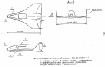
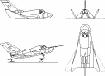
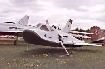
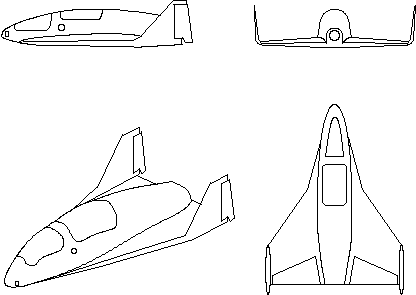
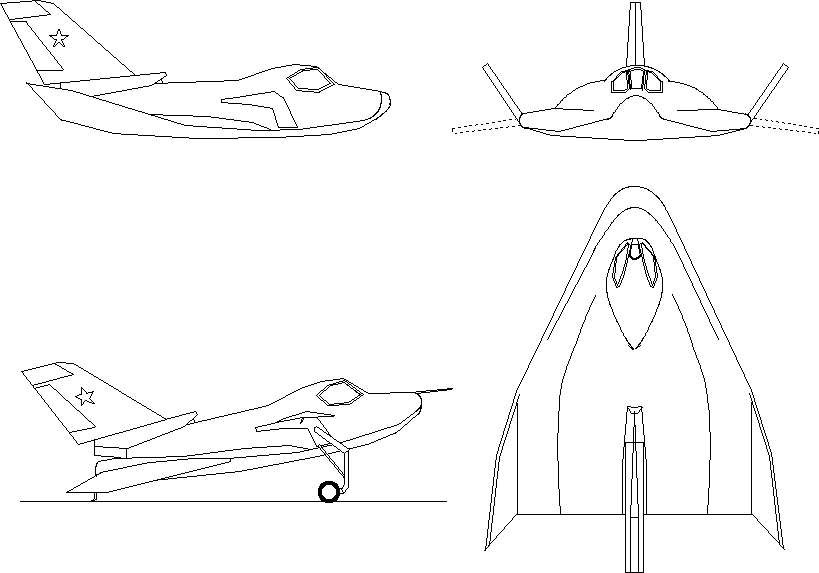
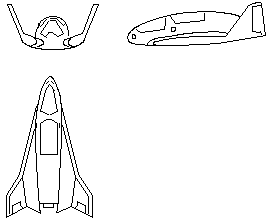
Objective: Manned. Type: Spaceplane. Two years following the cancellation of Chelomei's R spaceplane after Khrushchev's downfall, manned spaceplane work was resumed in the form of a competition between the Sukhoi and MiG bureaux. Sukhoi already had a potential launch aircraft in development (the trisonic T-4), but in the end MiG got the contract. Work began as early as 1962 with the Mikoyan study "50-50". The design was also referred to as "Raketoplan". This envisioned a hypersonic air-breathing first stage that would accelerate to Mach 5.5. A second rocket stage with a one man winged orbiter atop it would then continue into low earth orbit. Liftoff weight was 140 tonnes. The original plan called for manned flights atop rocket boosters by 1970 and the first atop the hypersonic air breathing booster in 1977. This project was cancelled in 1969, then resuscitated in 1972, resulting finally in the Article 105.11 aerodynamic test plane, which flew eight times in 1976 to 1978. The 105.11, nicknamed "Lapot" after its resemblance to a wooden shoe, was built to verify the aerodynamics in subsonic flight. The turbojet powered craft was 8 m long X 7.4 m wide X 3.5 m high with a gross weight of 10,300 kg. The project was initially killed off (or 'went black' - see the next paragraph) in 1978.
At the time of the decision to proceed with the development of the US space shuttle, the US Air Force had a baseline shuttle mission, requiring that a manned spaceplane take off from Vandenberg, do something (attack, intercept, or photograph a target) in a single orbit, and have sufficient cross-range to land back at Vandenberg or Edwards. This requirement was essential in 1971 to the USAF's participation in the shuttle project, which resulted in NASA selecting a heavier delta-winged design. While the development of the Buran was underway (but many years behind) as counterpoint, it is known that the Soviet leadership was terrified by the military's reports of the US space shuttle doing 'bomb runs on Moscow' during one of the earliest military shuttle missions. This indicated a need for a shorter-term solution, and once again the whole issue of having a manned space interception capability came up. The evidence indicates that the project was resuscitated in response to USAF plans to launch polar orbiting shuttle flights from Vandenberg. The Pentagon insisted (and released artist's conceptions) by the mid-1980's that a version of Spiral was being developed as an interceptor for launch atop the new Zenit booster. It was redesignated Uragan, with the Nudelmann OKB developing a recoilless weapon for destroying orbital targets. The Uragan lifting body configuration was tested in the BOR-4 subscale vehicle on orbital flights (with ocean recovery) in the 1980's. Meanwhile, after fifteen years and billions of dollars, the USAF cancelled shuttle flights from Vandenberg. Not only was the launch pad built there probably incapable of launching the shuttle due to explosive gas buildup in the exhaust vents, but the shuttle orbiter itself ended up short on cross range and couldn't have made the required return to Vandenberg. As soon as the Air Force decision was made, the Soviets cancelled the Uragan and the cosmonauts in training for it went to the Mir program. The Russians still consider the whole matter quite secret and categorically deny the Uragan project even exited. However the Spiral design, studied by NASA in hypersonic wind tunnel tests in the 1980's, was so good that NASA adopted for its proposed HL-20 lifting body manned resupply proposal in the early 90's.
Major Events: .
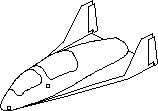
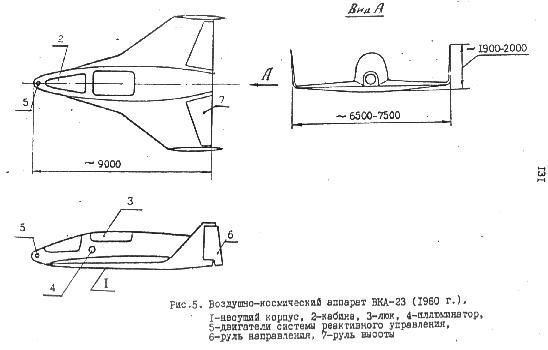
- 30 June 1957 First serious manned winged spacecraft design Spacecraft: VKA-23 Myasischchyev 1960. More details Summary: Myasishchev OKB-23 sketches first serious manned winged spacecraft design.
- 01 June 1958 Start of construction of manned spacecraft Spacecraft: VKA-23 Myasischchyev 1960. More details
Competing manned projects. Korolev OKB-1 proposed Vostok ballistic capsule as quickest way to put a man in space while meeting Zenit project's reconnsat requirements. Under project VKA-23 (Vodushno Kosmicheskiye Apparat) Myasishchev OKB-23 proposed two designs, a faceted craft with a single tail, and a dual tail contoured version. Tsybin OKB-256 proposed seven man winged craft with variable wing dihedral. Contracts awarded to all three OKB's to proceed with construction of protoypes. R-7 booster to be used for suborbital launches.
- 01 October 1960 Ongoing winged manned spacecraft project cancelled Spacecraft: VKA-23 Myasischchyev 1960. More details Summary: In reduction of military-industrical complex, Myasishchev and Tsybin design bureaus are closed and work stopped on the three prototype winged manned spacecraft already built.
- 01 June 1965 Beginning of Project Spiral Spacecraft: MiG 105-11. More details
With the cancellation of Chelomei's desultory R spaceplane development, the job is handed to 'the profis' - the fighter design bureaus of MiG and Sukhoi. Both would use an air breathing first stage (the XB-70 clone T-4 in Sukhoi's case, a huge new Tupolev hypersonic aircraft 'to be developed' in MiG's case). Second stage would be a conventional expendable rocket stage which would carry the relatively small Spiral spaceplane into orbit. Korolev had been doing some 'back door' work with MiG in competition to Chelomei's R project for some time (Began with 1962 Mikoyan study "50-50": Hypersonic first stage to Mach 5.5; rocket stage with one man), and immediately proposed tests from atop R-7 rockets as early as 1967. At the time all this was begun Dyna Soar was still an active US program.
- 01 June 1967 Original planned date for Spiral subsonic tests Spacecraft: MiG 105-11. More details
- 30 June 1969 Spiral project cancelled Spacecraft: MiG 105-11. More details Summary: No competing US project any more, huge obstacles in getting Tu-144 SST to fly at Mach 2 sustained let alone Mach 4 sustained for Tupolev's Spiral first stage.
- 30 June 1970 Original plan for tests of Spiral Spacecraft: MiG 105-11. More details Summary: Original planned date for first flight tests of Spiral with rocket first stage.
- 30 June 1974 Spiral project resurrected Spacecraft: MiG 105-11. More details Summary: Glushko supports modest project to do subsonic flight tests of Spiral orbiter configuration.
- 30 June 1977 Originally planned full up Spiral flight Spacecraft: MiG 105-11. More details Summary: Original planned date for flight test of Spiral with airbreathing hypersonic first stage.
- 30 September 1978 Uragan space interceptor project begun Spacecraft: Uragan Space Interceptor. More details
In order to counter US space shuttle flights made in polar orbits from Vandenberg, deep black Uragan project begun. Scaled-up Spiral to be launched by new Zenit launch vehicle, carrying Nudelmann recoilless gun (same as developed for TKS) for destruction of shuttle after interception and inspection. First flight planned 1983.
- 04 June 1982 Cosmos 1374 Spacecraft: BOR-4. Mass: 1,000 kg. Launch Site: Kapustin Yar . Launch Vehicle: Kosmos 65MP . More details
Manned related tests. Recovered June 3, 1982 23:19 GMT. Recovered 17 S, 98 E Indian Ocean, 560 km south of Cocos Islands. Made 600 km cross-range maneuver during reentry. Subscale Spiral.
Officially: Investigation of the upper atmosphere and outer space.
- 16 March 1983 Cosmos 1445 Spacecraft: BOR-4. Mass: 1,000 kg. Launch Site: Kapustin Yar . Launch Vehicle: Kosmos 65MP . More details Summary: Space plane test; splashed down in Indian Ocean. Recovered March 16, 1983 00:25 GMT, 556 km south of Cocos Islands .
Officially: Investigation of the upper atmosphere and outer space. .
- 22 December 1983 Cosmos 1517 Spacecraft: BOR-4. Mass: 1,000 kg. Launch Site: Kapustin Yar . Launch Vehicle: Kosmos 65MP . More details Summary: Space plane test. Recovered December 27, 1983 11:46 GMT in Black Sea.
Officially: Investigation of the upper atmosphere and outer space. .
- 19 December 1984 Cosmos 1614 Spacecraft: BOR-4. Mass: 1,000 kg. Launch Site: Kapustin Yar . Launch Vehicle: Kosmos 65MP . More details Summary: Space plane test. Recovered December 19, 1984 5:26 GMT, Black Sea.
Officially: Investigation of the upper atmosphere and outer space. .
- 01 August 1987 Cosmos 1871 Spacecraft: Uragan Space Interceptor. Mass: 15,000 kg. Launch Site: Baikonur . Launch Vehicle: Zenit . More details Summary: Possible spite test of Uragan space interceptor boilerplate mass model, just prior to project cancellation.
Officially: Investigation of the upper atmosphere and outer space. .
- 28 August 1987 Cosmos 1873 Spacecraft: Uragan Space Interceptor. Mass: 15,000 kg. Launch Site: Baikonur . Launch Vehicle: Zenit . More details Summary: Possible spite test of Uragan space interceptor boilerplate mass model, just prior to project cancellation.
Officially: Investigation of the upper atmosphere and outer space. .
- 01 September 1987 Uragan cancelled Spacecraft: Uragan Space Interceptor. Launch Vehicle: Zenit . More details
After full scale boilerplate tests in orbit, manned version prepared for launch by new Zenit booster. Cancelled in 1987, possibly due to US abandonment of shuttle flights from Vandenberg and military shuttle missions. Five cosmonauts transferred to Mir project.
Back to Index
Last update 11 January 1999.
Contact Mark Wade with any corrections, additions, or comments.
© Mark Wade, 1999 .