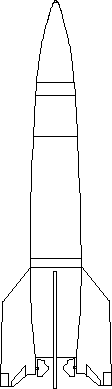
Credit: © Mark Wade. 1,627 bytes. 112 x 389 pixels.
| astronautix.com | V-2 |
|
| V-2 - Credit: © Mark Wade. 1,627 bytes. 112 x 389 pixels. |
First operational liquid fuel rocket. Developed by Germany in a huge development program as large in proportion to the German gross national product as the Manahattan atom bomb project was in America.. Development program cost $ 2 billion; 5,789 built; unit cost $ 17,877. 3,225 launched; total failure rate unknown, but 169 of 1359 against London unsuccessful. After the war captured German V-2's were launched by the British, Americans, and Russians. Personnel and technology from the V-2 formed the basis for subsequent rocketry developments throughout the world.
Liftoff Thrust: 27,010 kgf. Total Mass: 12,805 kg. Core Diameter: 1.7 m. Total Length: 14.0 m. Development Cost $: 2,000.00 million. in 1943 average dollars. Total Production Built: 5789. Flyaway Unit Cost $: 0.02 million. in 1944 unit dollars.
Signing of Treaty of Versailles disarmed Germany of a military air force but did not include rockets as potential weapons, thus leaving Germany free under international law to develop them.
Die Rakete zu den Planetenräume (The Rocket Into Interpanetary Space) by Hermann Oberth was published in Germany, and was the genesis for considerable discussion of rocket propulsion. The book would have a huge and life-changing impact on ten year old Wernher Von Braun.
Society for Space Travel (Verein fuer Raumschiffahrt), known as "VfR," formed in Breslau, Germany.
Hermann Oberth and VfR successfully tested liquid oxygen and gasoline-fueled rocket motor for 90 seconds in Germany, a demonstration made before the Director of the Chemisch-Technische Reichsanstalt to secure financial support.
German Army Ordnance Office, after reviewing work of Goddard and others, decided to establish rocket program and to equip artillery proving ground at Kummersdorff to develop military missiles.
Raktenflugplatz in Germany was visited by Mr. and Mrs. G. Edward Pendray as official representatives of the American Interplanetary Society, who upon their return organized the experimental program of the society.
Wernher von Braun joined the German Army Ordnance Office rocket program at Kummersdorf.
Joint German Army-Air Force rocket research station opened at Peenemünde on Baltic Sea; Army Ordnance rocket program under Capt. Walter Dornberger moved his staff from Kummersdorf.
First successful launch and flight of 5 tonne German A-4 rocket (V-2) at Peenemünde, which traveled 190 km.
Prime Minister Winston Churchill of England was informed of reports on German experiments with long-range rockets.
Germans operationally test fired over 100 V-2's from Blizna, Poland, launching 10 on one day, only a small number of which were fully successful.
Royal Air Force attacked Germany's Peenemünde Rocket Research Center, causing heavy damage and delaying V-weapon program by weeks or months.
Remains of V-2 which impacted in Sweden were flown to England for Allied analysis.
First German V-2 fired in combat exploded in suburb of Paris; the second struck London a few hours later.
Life published drawings of a manned space station as envisioned by the German rocket scientists of Peenemünde.
Secretary of War Patterson approved plan to bring top German scientists to United States to aid military research and development. Small group of German rocket specialists brought to United States under Project Paperclip to work on missile development at Fort Bliss and White Sands Proving Ground.
Launch of V-2 from Altenwalde by German technicians under British direction in order to document launch procedures.
Third and final launch in Project Backfire, with allied observors. Glushko, Sokolov, Pobedonostsev; Korolev and Gaidukov kept outside fence; Von Karman, Merrill, Seifert, Pickering from US.
U.S. upper atmosphere research program initiated with captured German V-2 rockets. A V-2 panel of representatives of various interested agencies was created, and a total of more than 60 V-2's were fired before the supply ran out. The Applied Physics Laboratory of Johns Hopkins University then undertook to develop a medium-altitude rocket, the Aerobee, while the Naval Research Laboratory (NRL) directed its efforts to the development of a large high-altitude rocket, first called the Neptune, later the Viking.
First flight test of American-assembled V-2 rocket launched by the Army at White Sands Proving Ground. Launched 14:47 local time. Reached 5.5 km. Carried cosmic radiation (Applied Physics Lab, John Hopkins University) experiments for General Electric.
Launched 14:15 local time. Reached 112.9 km. Carried cosmic radiation (Applied Physics Lab, John Hopkins University) experiments for General Electric.
Council of Soviet Ministers (SM) Decree 1017-419ss 'Questions of Reactive Armaments-formation of Special Committee for Reactive Technology (later Special Committee No. 2) of Council of Ministers for the co-ordination of work on missiles' was issued. This decree set up a number of new research institutes to exploit German rocket technology.
Launched 14:10 local time. Reached 112.4 km. Carried cosmic radiation (Applied Physics Lab, John Hopkins University) experiments for General Electric.
Launched 16:40 local time. Reached 117.7 km. Carried solar radiation, ionosphere (Naval Research Lab) experiments for General Electric.
Launched 12:03 local time. Reached 108.1 km. Carried cosmic radiation, solar radiation, pressure, and temperature experiments for Naval Research Lab.
 | Comparison of A9/A10 - Comparison of A9/A10 Versions Credit: © Mark Wade. 6,010 bytes. 484 x 354 pixels. |
Launched 12:11 local time. Reached 4.8 km. Carried ionosphere (Naval Research Lab) experiments for General Electric.
Launched 12:40 local time. Reached 161.9 km. Carried cosmic radiation, ionosphere (Naval Research Lab); and biological (Harvard) experiments for Applied Physics Lab, John Hopkins University.
Launched 11:00 local time. Reached 6.5 km. Carried cosmic radiation experiments for Palmer Physics Lab, Princeton University.
Launched 10:15 local time. Launch failure. Carried pressure, density, ionosphere, sky brightness experiments for Air Research and Development Command.
Army Ordnance initiated Bumper Project for development leading to a two-stage rocket test vehicle, which resulted in use of JPL WAC Corporal as second stage of a V-2.
Launched 11:02 local time. Reached 174.2 km. Carried cosmic and solar radiation, pressure, temperature, biological experiments for Naval Research Lab.
Launched 12:18 local time. Reached 104.8 km. Carried cosmic and soalr radiaiton, winds, photography experiments for Applied Physics Lab, John Hopkins University. The John Hopkins camera took motion pictures of the earth at over 100 km altitude (pictures covered 100,000 square km.)
Launched 13:31 local time. Reached 0.3 km. Carried cosmic radiation experiments for Palmer Physics Lab, Princeton University.
Launched 10:00 local time. Reached 101.6 km. Carried pressure, temperature, ionosphere, sky brightness experiments for Air Research and Development Command.
Launched 13:08 local time. Reached 153.2 km. Carried cosmic and solar radiation, pressure, temperature, photo experiments for Naval Research Lab.
Launched 22:18 local time. Reached 183.9 km. Carried cosmic radiation, meteorites; biological (National Institute of Health) experiments for Applied Physics Lab, John Hopkins University.
Launched 14:13 local time. Reached 116.5 km. Carried cosmic radiation experiments for Naval Research Lab.
Launched 17:22 local time. Reached 50 km. Carried no upper atmospheric research experiments. Technology flight for General Electric.
Launched 11:16 local time. Reached 109.7 km. Carried pressure, ionosphere, sky brightness, biological, photo experiments for Air Research and Development Command. First of a series of V-2 firings known as Blossom Project, tested ejection of canister and its recovery by parachute, containing fruit flies and various types of seeds exposed to cosmic rays.
Launched 11:23 local time. Reached 162.9 km. Carried cosmic radiation, pressure, temperature, photo, biological experiments for Naval Research Lab. Took first photograph from 100-mile altitude.
Launched 13:10 local time. Reached 129.5 km. Carried cosmic and solar radiation, photo experiments for Applied Physics Lab, John Hopkins University.
Launched 17:13 local time. Reached 102.4 km. Carried cosmic and solar radiation, photo experiments for Applied Physics Lab, John Hopkins University.
Launched 14:22 local time. Reached 142.7 km. Carried pressure, temperature (Signal Corps Engineering Lab, University of Michigan) experiments for General Electric.
Launched 16:04 local time. Reached 135.5 km. Carried cosmic and solar radiation, temperature, ionosphere, photo experiments for Naval Research Lab. Landed east of the impact zone on the outskirts of Alamagordo, New Mexico
V-2 impacts a graveyard 18.5 km south of Juarez, Mexico. This and the out-of-range impact on 15 May resulted in new safety measures at WSPG. 'We were the first German unit to not only infiltrate the United States, but to attack Mexico from US soil'. This vehicle was deeply classified at the time. Hermes experiments were conducted with modified V-2 rockets to test the configuration of a ramjet propulsion system. Four Hermes B-1 rockets were flown from Complex 33, none of which were noted in the contemporary records.
Launched 12:18 local time. Reached 16.1 km. Carried cosmic radiation, pressure, temperature, ionosphere, biological (Harvard) experiments for Naval Research Lab.
Council of Soviet Ministers (SM) Decree 2643-818ss 'On testing of two series of A-4 rockets in 1947' was issued. The missiles were to be fired at the new rocket test ground at Kapustin Yar ('Volgograd Station') .
 | Nordhausen V-2 Plant Credit: RKK Energia. 11,333 bytes. 312 x 218 pixels. |
Operation Sandy - German V-2 rocket launched from U.S. aircraft carrrier Midway in Atlantic tests, exploding prematurely after a 10 km flight. This had been preceded by Operation Pushover - the deliberate explosion of a fully tanked V-2 on a dummy shipdeck at White Sands to determine its effect on shipboard launching.
Launched 12:15 local time. Reached 156.5 km. Carried Solar radiation (Naval Research Lab); pressure, composition (SCEL) experiments for General Electric. General Electric engineers obtained the first carefully instrumented heat-transfer data from supersonic flight when this V-2 attained 1520 m/s.
Range achieved 206.7 km. Destroyed during ballistic portion of flight.
Range achieved 231.4 km. Tore loose from launch stand; flew 180 km left of planned target.
Launched 16:47 local time. Reached 26.8 km. Carried no upper atmospheric research experiments. Technology flight for General Electric.
Launched 14:42 local time. Reached 104.8 km. Carried pressure, temperature, solar radiation, sky brightness, ionosphere, photo experiments for Air Research and Development Command.
Launched 13:12 local time. Reached 159.7 km. Carried cosmic radiation, pressure, temperature, ionosphere experiments for Naval Research Lab.
Launched 10:15 local time. Reached 111.3 km. Carried No upper atmosphere experiments. Technology flight for General Electric. Successful electronic flight control demonstrated by General Electric technicians for Army Ordnance.
V-2 Upper Atmosphere Research Panel, representing all U.S. interested agencies, was renamed the Upper Atmosphere Rocket Research Panel.
Launched 16:10 local time. Reached 5.5 km. Carried Magnetic field, composition, winds, temperature (Signal Corps Engineering Lab, University of Michigan) experiments for General Electric.
Launched 06:40 local time. Reached 144.4 km. Carried Density, pressure, temperature, composition, cosmic and solar radiation (Naval Research Lab) experiments for Signal Corps Engineering Lab, University of Michigan.
Launched 12:54 local time. Reached 56.1 km. Carried cosmic and solar radiation, pressure, temperature experiments for Naval Research Lab.
First two-stage Bumper-Wac fired. Short duration Wac Corporal test; round successful. V-2 reached 112.4 km, 1220 m/s; Wac Corporal 127.6 km, 1345 m/s.
Launched 07:16 local time. Reached 140 km. Carried cosmic and solar radiation, photo, composition (Signal Corps Engineering Lab, University of Michigan) experiments for Applied Physics Lab, John Hopkins University.
Launched 03:22 local time. Reached 62.4 km. Carried pressure, temperature, composition, ionosphere, sky brightness, solar radiation experiments for Air Research and Development Command. Also carried Albert, the first American primate in space, who died of suffocation.
Launched 11:03 local time. Reached 87.1 km. Carried cosmic radiation, photo, pressure, temperature experiments for Applied Physics Lab, John Hopkins University. Fired from White Sands simultaneous with a Navy Aerobee which reached an altitude of 110 km. Both carried cameras which photographed the curvature of the earth.
Launched 05:07 local time. Reached 166.1 km. Carried cosmic and solar radiation, temperature, pressure, ionosphere, photo experiments for Naval Research Lab.
Launched 18:00 local time. Reached 151 km. Carried Density, pressure, temperature, composition experiments for Signal Corps Engineering Lab, University of Michigan.
Failure in the second stage, explosion prior to seperation. V-2 reached 150.6 km, 1410 m/s; WAC destroyed.
Failure in first stage due to break in alcohol piping. V-2 reached 5 km, 390 m/s; WAC destroyed.
Launched 15:34 local time. Reached 145.6 km. Carried biological (Harvard), solar radiation (Naval Research Lab), composition (Signal Corps Engineering Lab, University of Michigan) experiments for General Electric.
Launched 09:08 local time. Reached 108.7 km. Carried Winds, pressure, temperature; solar radiation (Naval Research Lab) experiments for Signal Corps Engineering Lab, University of Michigan.
Launched 10:20 local time. Reached 60 km. Carried cosmic and solar radiation, pressure, temperature, photo experiments for Naval Research Lab.
Launched 10:00 local time. Reached 100.8 km. Carried cosmic and solar radiation, photo (Naval Research Lab); composition (Signal Corps Engineering Lab, University of Michigan); biological experiments for Applied Physics Lab, John Hopkins University.
Fully fueled round used and attained highest altitude to that date. In addition to testing equipment the flight was used to measure upper air temperatures. V-2 reached 102 km, 1170 m/s; WAC 400 km, 2300 m/s. Provided information on ion densities in the F-region of the ionosphere.
Launched 23:43 local time. Reached 133.9 km. Carried Ionosphere, sky brightness, solar radiation, composition, photo experiments for Air Research and Development Command.
Launched 15:05 local time. Reached 87.4 km. Carried Temp, composition, solar radiation (Naval Research Lab); biological experiments for Signal Corps Engineering Lab, University of Michigan.
Failed in the first stage. Vehicle was supposed to obtain cosmic ray data at altitudes unattainable by other rockets. V-2 reached 50 km, 790 m/s; WAC destroyed.
Launched 08:15 local time. Reached 8.9 km. Carried Solar radiation (Naval Research Lab) experiments for General Electric.
Launched 15:35 local time. Reached 133.9 km. Carried cosmic and solar radiation, temperature, pressure, ionosphere, photo experiments for Air Research and Development Command. Second V-2 flight carrying a live AF Aero Medical Laboratory monkey, Albert II. The monkey survived but died on impact.
Launched 16:19 local time. Reached 4.2 km. Carried Composition, ionosphere, meteorites, solar and cosmic radiation, sky brightness, biological experiments for Air Research and Development Command. Third V-2 flight carrying a live AF Aero Medical Laboratory monkey, Albert III. The monkey survived but died on impact.
Launched 09:58 local time. Reached 151.1 km. Carried cosmic and solar radiation, meteorites, pressure experiments for Naval Research Lab.
Launched 08:03 local time. Reached 124.2 km. Carried winds, composition, temperature; cosmic radiation (APL, John Hopkins); and solar radiation (Naval Research Lab) experiments for Signal Corps Engineering Lab, University of Michigan.
Launched 12:14 local time. Reached 130.6 km. Carried Composition, ionosphere, meteorites, solar radiation, sky brightness experiments for Air Research and Development Command. Last monkey, Albert IV, launched in V-2 series. The successful flight indicated no ill effects on monkey until impact of V-2.
Launched 11:01 local time. Reached 149 km. Carried cosmic and solar radiation, pressure, temperature experiments for Naval Research Lab.
Pad abort on 19 July of Bumper No. 8, a German V-2 with a 320 kg Army-JPL Wac Corporal. Launch scrubbed first due to emergency landing of aircraft in the range; second attempt, no lift, main chamber did not ignite.
Bumper No. 8, a German V-2 with a 320 kg Army-JPL Wac Corporal, was fired from the Long-Range Proving Ground at Cape Canaveral at a very low angle of attack. The first-stage V-2 climbed 16 km before it exploded. The second-stage Corporal separated successfully, however, and traveled another 24 km. This was the first missile launch from Cape Canaveral.
Bumper No. 7 was the second missile launch from Cape Canaveral. This was to be a maximum range test of a two-stage vehicle, to study the problems in staging. The launch was delayed because of moisture in the vehicle. But when finally launched, the WAC achieved the highest sustained speed in the atmosphere to that date (Mach 9/2500 m/s) and 35.2 km altitude before impacting 305 km downrange.
Launched 10:09 local time. Reached 136.8 km. Carried Ionosphere, meteorites, sky brightness, density, biological experiments for Air Research and Development Command. Last of five Aeromedical Laboratory experiments (first four known as Albert series), it carried a nonanesthetized mouse, photographed by a camera, which survived the impact.
Launched 16:02 local time. Reached 8.1 km. Carried No upper atmospheric research experiments. Technology flight for Naval Research Lab.
Launched 13:14 local time. Reached 1.6 km. Carried cosmic and solar radiation experiments for Naval Research Lab.
Launched 20:16 local time. Reached 3.1 km. Carried composition, air glow, sky brightness, ionosphere experiments for Air Research and Development Command.
Launch failure. Carried solar and cosmic radiation experiments for Naval Research Lab.
Launched 14:43 local time. Reached 5.8 km. Carried solar radiation, air glow, sky brightness experiments for Air Research and Development Command.
TF-1 was the first V-2 launched by an all US Army team that was taking over from the General Electric crew as GE's contract to assemble, test and launch the missiles was coming to a close. It was the 'Final Exam' for this new team to prove were capable of handling the program from then on. Since no experiments were to be on board it was decided to shoot for an altitude record, and various modifications were made to this end. TF-1 was launched 12:00 local time. and reached 213.9 km.
Launched 14:04 local time. Reached 141.3 km. Carried pressure, temperature experiments for Signal Corps Engineering Lab, University of Michigan.
Launched 09:06 local time. Reached 103.7 km. Carried composition, photography experiments for Signal Corps Engineering Lab, University of Michigan. V-2 number 58 never launched.
Launched 00:33 local time. Reached 78.2 km. Carried composition, pressure, magnetic field, solar radiation; cosmic radiation (National Institute of Health); sky brightness (Air Research and Development Command) experiments for Naval Research Lab. V-2 number TF-2 was flown as contractor vehicle 59.
Launched 08:49 local time. Reached 27.1 km. Carried temperature, composition; cosmic radiation (National Institute of Health) experiments for Signal Corps Engineering Lab, University of Michigan. V-2 number TF-4 never flown.