| astronautix.com | US Rocketplanes |
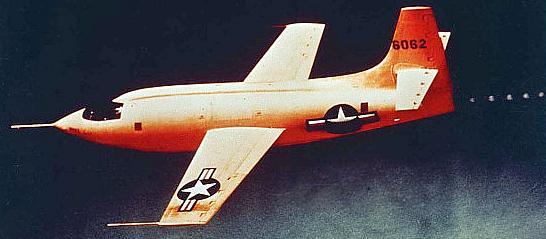
![]() | Spacecraft: XS-1. Also known as the X-1. This rocket plane was the first aircraft to break the sound barrier, and the first in a line of X- aircraft leading to the space shuttle. Due to the press of war work, Bell Aircraft was the only company that would take on the project in 1944. German swept-wing research being unknown, the configuration developed was a thin, straight-winged aircraft with a bullet-shaped fuselage. The XS-1 began flight test in 1946 and Chuck Yeager flew it through the sound barrier on October 14, 1947. |
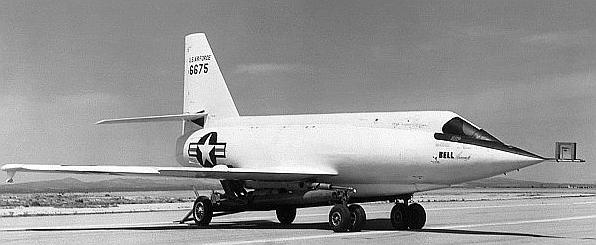
![]() | Spacecraft: X-2. X-2 was an AAF/ Bell project that flew three supersonic flight research aircraft, powered by liquid rockets. Originally designated XS-2. The X-2 was the first swept-wing X rocketplane. It exceeded Mach 3, but in the course of doing so uncovered the supersonic aircraft problem of inertial coupling. On its last flight the aircraft crashed and the pilot was killed. |
![]() | Spacecraft: D-558-1. The D-558-I "Skystreaks" were among the early transonic research airplanes like the X-1, X-4, X-5, and XF-92A. Three of the single-seat, straight-wing aircraft flew in a joint program involving the National Advisory Committee for Aeronautics (NACA), with its flight research done at the NACA�s Muroc Flight Test Unit in Calif., redesignated in 1949 the High-Speed Flight Research Station; the Navy-Marine Corps; and the Douglas Aircraft Co. from 1947 to 1953. In the process, the Skystreaks managed to set a couple of world speed records. |
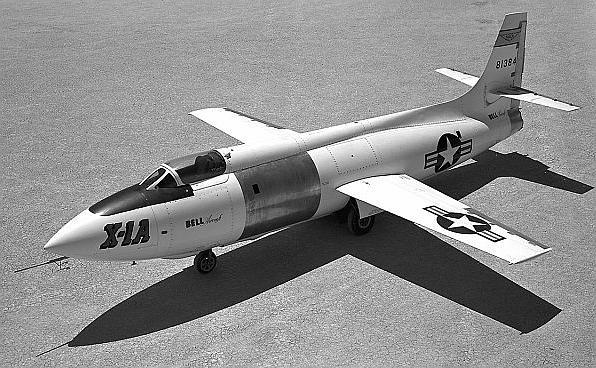
![]() | Spacecraft: X-1A. The X-1A, B, and D were essentially identical rocketplanes intended to reach speeds above Mach 2. The X-1A and X-1D were destroyed in in-flight explosions; the X-1B survived, training future moon lander Neil Armstrong on its last flights in 1958. |
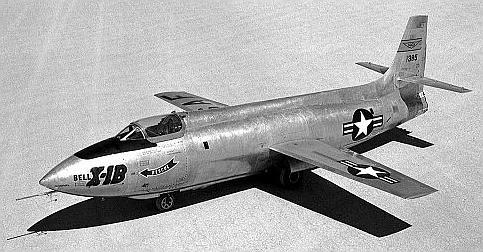
![]() | Spacecraft: X-1B. The X-1A, B, and D were essentially identical rocketplanes intended to reach speeds above Mach 2. The X-1A and X-1D were destroyed in in-flight explosions; the X-1B survived, training future moon lander Neil Armstrong on its last flights in 1958. |
| Spacecraft: X-1D. The X-1A, B, and D were essentially identical rocketplanes intended to reach speeds above Mach 2. The X-1A and X-1D were destroyed in in-flight explosions; the X-1B survived, training future moon lander Neil Armstrong on its last flights in 1958. |
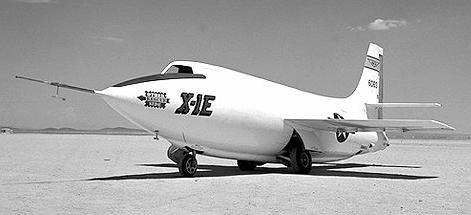
![]() | Spacecraft: X-1E. The X-1E was designed to test an ultra-thin 4% thickness to cord wing for supersonic flight. |
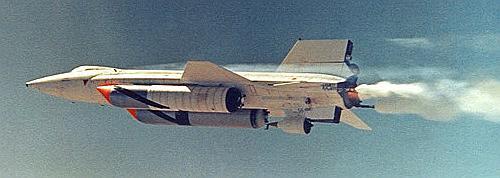
![]() | Spacecraft: X-15A-2. A crashed X-15 no. 2 was rebuilt to attain even higher speeds. The body frame was stretched, two drop tanks were added, increasing fuel load by 75%. An ablative heat shield was applied for the high speeds that could be attained. The X-15A-2 reached the highest speeds and altitudes of any manned spaceplane until the space shuttle entered service. |