This page no longer updated from 31 October 2001. Latest version can be found at www.astronautix.com
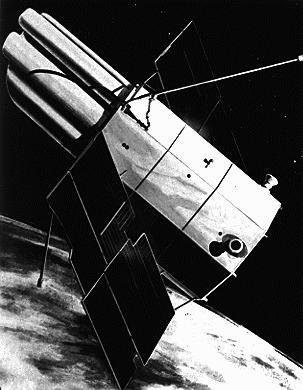 |
| OAO - Orbiting Astronomical Observatory Credit: NASA. 24,060 bytes. 303 x 390 pixels. |
|
Class: Astronomy. Type: Visible. Nation: USA. Agency: NASA. Orbiting Astronomical Observatory.
SpecificationTotal Mass: 2,027 kg.
OAO Chronology
08 April 1966
OAO 1 Launch Site: Cape Canaveral . Launch Vehicle: SLV-3 Atlas / Agena D. Mass: 1,774 kg. Perigee: 783 km. Apogee: 793 km. Inclination: 35.0 deg. Orbiting Astronomical Observatory. Spacecraft engaged in research and exploration of the upper atmosphere or outer space (US Cat B).
07 December 1968
OAO 2 Launch Site: Cape Canaveral . Launch Vehicle: Atlas Centaur SLV-3C. Mass: 2,012 kg. Perigee: 749 km. Apogee: 758 km. Inclination: 35.0 deg. Orbiting Astronomical Observatory; carried 11 telescopes; performed X-ray, UV, IR observations of stars. Spacecraft engaged in research and exploration of the upper atmosphere or outer space (US Cat B). Launch vehicle put payload into geosynchronous transfer orbit
30 November 1970
OAO-B Launch Site: Cape Canaveral . Launch Vehicle: Atlas Centaur SLV-3C. FAILURE: Shroud failed to separate. Mass: 2,121 kg. Orbiting Astronomical Observatory. Launch vehicle was to have put payload into geosynchronous transfer orbit
21 August 1972
OAO 3 Launch Site: Cape Canaveral . Launch Vehicle: Atlas Centaur SLV-3C. Mass: 2,204 kg. Perigee: 713 km. Apogee: 724 km. Inclination: 35.0 deg. UV observations of stellar objects. Spacecraft engaged in research and exploration of the upper atmosphere or outer space (US Cat B). Launch vehicle put payload into geosynchronous transfer orbit
Bibliography:- 126 - Bramscher, Robert G, Spaceflight, "A Survey of Launch Vehicle Failures", 1980, Volume 22, page 351.
Back to Index
Last update 12 March 2001.
Contact Mark Wade with any corrections or comments.
Conditions for use of drawings, pictures, or other materials from this site..
© Mark Wade, 2001 .