 |
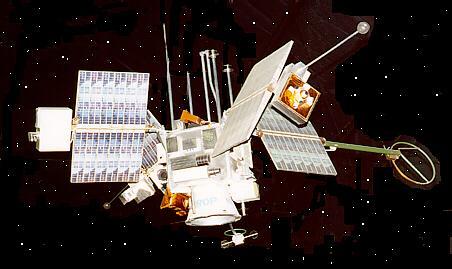
| OV-2-5 Credit: USAF Museum. 24,962 bytes. 452 x 269 pixels. |
| astronautix.com | OV2 |
|
| OV-2-5 Credit: USAF Museum. 24,962 bytes. 452 x 269 pixels. |
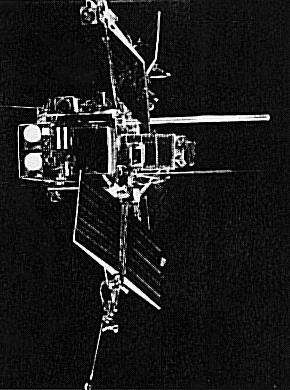
Northrop Systems Laboratories developed and produced the OV2 satellites for the USAF Office of Aerospace Research. The satellite was a secondary payload for the Titan III-C test flights. Three of the satellites were designed by Northrop, each with diverse applications. The first two OV2 satellites failed to orbit, due to a Titan transtage malfunction. Northrop designed, fabricated, integrated, assembled and tested the OV2 vehicles for the Air Force. On-board experimentation was provided by Air Force Cambridge Research Laboratories (AFCRL), Air Force Weapons Laboratory (AFWL), and the Air Force Space Systems Division, Aerospace Corporation (SSD/Aerospace). Most subsystem equipment used on the OV2 spacecraft had been demonstrated on previous programs and was readily available for other experiment applications, The spacecraft series was powered by solar energy collected by 4 paddles which extend when the vehicle was in orbit. Span of the basic satellite with paddles extended was approximately 3.7 m. The OV2-5 was a low cost, near-earth space research satellite. It was designed for solar, magnetic, and cosmic ray research in space. On September 28, 1968, it was boosted from the ground by a Titan III launch vehicle into a circular equatorial orbit at an altitude of 22,000 miles above the Earth. It was designed with an operating life in space of at least one year.
 | OV2 Credit: USAF. 24,983 bytes. 290 x 390 pixels. |
Total Mass: 189 kg.
Dual launch with LCS 2; upper stage broke up. Space craft engaged in investigation of spaceflight techniques and technology (US Cat A).
Upper stage separation failed. Space craft engaged in investigation of spaceflight techniques and technology (US Cat A).
Environmental research. Space craft engaged in investigation of spaceflight techniques and technology (US Cat A).