This page no longer updated from 31 October 2001. Latest version can be found at www.astronautix.com
 |
| Mars 1989 - Version of the Mars 1989 shown by RKK Energia in 1990 Credit: via Steven S. Pietrobon. 10,850 bytes. 259 x 801 pixels. |
|
Class: Manned. Type: Mars Expedition. Nation: Russia. Manufacturer: Korolev. In 1989 yet another Mars project was proposed by NPO Energia. The spacecraft hardware was essentially that of the 1986 design, in place of the nuclear reactor of previous designs power would be generated by huge farms of solar panels, developed from those on the Salyut 7 and Mir stations. The spacecraft itself became part of a more logical program with sequential launch of evolving hardware, beginning with unmanned spacecraft and ending with piloted expeditions. Five launches of the huge Energia booster would be required to assemble the spacecraft in low earth orbit. Mission specification was as follows:
- Flight time - 716 days
- Crew - 4
- Crew on surface of Mars - 2
- Time of work on Martian surface - 7 days.
The ship designed to perform this mission would have a mass of 355 tonnes.
This would be apportioned among the modules as follows:
- MOA (Mars Orbital Apparatus) - 80 tonnes, a 4.1 m diameter cylinder, 23 m long, divided into three sections: living section, a spherical airlock/transfer compartment, and a work section. The living compartment contained a cabin for each crew member, a common room, and a rest area. As always, a radiation shelter was included to shield the crew during solar storms. A greenhouse would augment the SZhO life support system. This system was designed around the following daily consumption values per crew member: oxygen - 600 l/day; carbon dioxide to be eliminated - 480 l/day; water to be supplied - 2.5 kg/day; food requirement - 2.0 kg/day. The regenerative design of SZhO meant that only 0.5 kg of water and 1.5 kg of food would have to come from reserve stocks per day. The greenhouse would have an area of 15 square meters and a mass of mass of 500 kg per crew member. Total mass of the life support system was 26 tonnes, including 5.5 tonnes of food reserves, and 1 tonne of emergency food stocks.
- EA (Expeditionary Apparatus) - the Mars landing craft, 60 tonnes mass, 3.8 m in diameter and 13 m long. Both conical and pear-shaped lifting bodies were studied, with a hypersonic lift to drag ratio of 0.3 to 0.5. The preferred configuration was a cylindrical spacecraft with a conical nose. The primary braking engine was housed in the tail, and brought the spacecraft horizontally to zero velocity above the Martian surface. A landing engine at the belly of the cylinder would then fire to bring the spacecraft to a 2 m/s touchdown on four landing legs. The crew would descend to the surface in a cylindrical airlock tunnel that deployed from the belly of the cylinder to the surface. The vehicle included a Martian living compartment, a propulsion section, a return module, and the tail compartment with braking engine. Provisions were carried for a stay of one week on the surface and one day in Mars orbit.
- AVNZ (Earth re-entry vehicle), 10 tonnes. This was the same as that designed for MEK in 1969.
- Electric engines, structure, and solar panels, 40 tonnes. The two enormous panels, each 200 m x 200 m would generate a total of 15 MW of power at earth. The use of ultra-thin (less than 50 micrometer) / low mass (0.2 kg per square meter) photovoltaic cells with a high specific power value (up to 200 W per square meter) minimised the mass of these vast arrays. The power generated would be used primarily by two ion engines mounted perpendicular to the living block. In high-power mode these would have a specific impulse of 3500 seconds. Total thrust at normal level, assuming the 4000 second specific impulse of the 11B97 engine, can be calculated as 45 kgf.
- Xenon propellant, 165 tonnes
In order to clear the earth's radiation belts as quickly as possible, the mission profile began with a relatively 'high thrust' acceleration by the engines in a spiral from low earth orbit to 40,000 km. This altitude would be achieved in 29 days. Thereafter the engines would shift into their normal regime, with a lower thrust but higher specific impulse. The spacecraft would reach escape velocity after a total of 100 days of firing, followed by a 270 day coast to Mars. A 38 day braking manoeuvre would bring the spacecraft into Mars orbit. 30 days would be spent in Mars orbit, during one week of which the crew would descend to the surface. It would take 28 days to accelerate away from Mars, followed by a 250 day coast to earth. The crew would enter their return vehicle and re-enter the earth's atmosphere at 13.5 km/sec.
This evolutionary approach to the exploration of Mars was to be conducted in three phases:
- Phase 1 - A small model spacecraft would be assembled at the Mir station with assistance from Progress re-supply craft. This 'Mars Module' would test the solar panels, ion engines, and other essential systems of the larger manned spacecraft. From its initial low earth orbit it would fly to Mars, arriving in a circular near-Mars orbit with a research apparatus mass of 1.3 tonnes. From this orbit the equipment could have a functional life of two years. It was also possible to return equipment back to low earth orbit. Mass of the spacecraft on departure from Mir would be 5500 kg, with the solar battery generating 180 kW. The apparatus could be refuelled in the space station orbit from Progress tankers. After replacement of the research equipment it could then be launched to Mars again. In 1994, during discussions between NASA Administrator D Goldin and RKK Energia Director Y P Semenov on the International Space Station (ISS), Semenov proposed the use of this Mars Module from the ISS. Although Goldin indicated interest in the advantages of the concept, the project was not pursued further.
 | Energia Mars 89 - In 1989 yet another Mars project was proposed by NPO Energia. In the place of the nuclear reactor of previous designs power would be generated by huge farms of solar panels. Crew size was reduced from that specified for Aelita, but use of solar panels still doubled the spacecraft mass. Five launches of the Energia booster would be required to assemble the spacecraft in low earth orbit. Credit: © Mark Wade. 14,336 bytes. 194 x 279 pixels. |
- Phase 2 - Preparatory delivery of equipment for subsequent piloted expeditions. A solar tug would deliver to Martian orbit two descent craft. One would have the complete equipment for landing and return of the crew. The other would have several Marsokhod rovers (total mass around 20 tonnes), which would be used to conduct detailed investigations of the Martian surface
- Phase 3 - The piloted expedition to Mars.
Of course by the late 1980's all such studies by GKB NPO Energia were only a way to usefully occupy the engineers of the corporation and had no chance of authorisation.
SpecificationCraft.Crew Size: 4. Design Life: 716 days. Total Length: 600.0 m. Maximum Diameter: 4.1 m. Total Mass: 355,000 kg. Primary Engine Thrust: 45 kgf. Main Engine Propellants: Xenon. Main Engine Isp: 4,000 sec. Electric system: 15,000.00 total average kW. Electrical System: Solar panels, 2 x 200 m x 200 m.
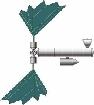 | Mars 1989 - NPO Energia solar-powered Mars expedition spacecraft of 1989. The complete extent of the vast 200 m x 200 m solar panels is not shown. Credit: © Mark Wade. 11,044 bytes. 320 x 355 pixels. |
Mars 1989 Chronology
01 January 1989
Manned Mars project proposal In 1989 yet another ion engine-powered Mars project was proposed by NPO Energia. In the place of the nuclear reactor of previous designs, solar panels would be deployed in huge farms of panels.
Bibliography:- 89 - Semenov, Yu. P., S P Korolev Space Corporation Energia, RKK Energia, 1994.
- 193 - Placard, TsNIIMASH Museum, .
- 206 - Krasnikov, Aleksandr, Russian Space History Web Site, "Pilotiruemiy polyot na Mars - chetvert veka nazad", . HTML when accessed: http://www.aha.ru/~kai/spaceflt/index.html
 | EA Ascent Stage - The Ascent Stage of the EA Mars Lander fires to launch the crew back to Mars orbit and rendezvous with the waiting Mars 1986 or 1989 expedition craft. Credit: RKK Energia. 22,276 bytes. 310 x 238 pixels. |
 | EA Lander - EA Lander on Mars. Note the cyldindrical air lock that has deployed from the belly, the landing legs, the aerodynamic surfaces on the tail, and the small Marsokhod rover on the surface. Credit: RKK Energia. 25,982 bytes. 307 x 237 pixels. |
 | Aelita Martian - Wishful thinking - a Martian peeks from a crater after the EA Lander departs for orbit. Frame from an RKK Energia film. Credit: RKK Energia. 23,027 bytes. 311 x 239 pixels. |
 | Mars 1989 - NPO Energia solar-powered Mars expedition spacecraft of 1989. Credit: RKK Energia. 12,728 bytes. 323 x 206 pixels. |
Back to Index
Last update 3 May 2001.
Contact Mark Wade with any corrections or comments.
Conditions for use of drawings, pictures, or other materials from this site..
© Mark Wade, 2001 .


