| astronautix.com | Wolf |
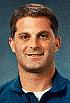
Selected as a NASA astronaut in January 1990, Dr. Wolf became qualified for spaceflight July 1991. His technical assignments have included Orbiter vehicle processing and test at Kennedy Space Center (1991-1992), STS-58 mission specialist (1993), and spacecraft communications (CAPCOM) (1994-1995). He is qualified for Extravehicular Activity (Spacewalk), Remote Manipulator System (Robot Arm), and Rendezvous. He was the CAPCOM for the first and third Shuttle-MIR rendezvous. He is at the Gagarin Cosmonaut Training Center in Star City, Russia, training for a mission aboard the Russian Space Station Mir in early 1998. He will launch aboard Space Shuttle Discovery as part of the STS-89 crew.
Dr. Wolf served as a mission specialist astronaut aboard Space Shuttle Columbia (STS-58), a 14 day dedicated Spacelab life sciences research mission (10/16/93-11/1/93). During this record length shuttle mission the crew conducted neurovestibular, cardiovascular, cardiopulmonary, metabolic, and musculoskeletal research utilizing microgravity to reveal fundamental physiology normally masked by earth gravity. They accomplished 225 orbits in 336 hours, 13 minutes, 01 seconds.
Biological, microgravity experiments aboard Spacelab 2. Payloads: Spacelab Life Sciences (SLS) 2, Shuttle Amateur Radio Experiment (SAREX) II.
Atlantis was launched on a mission to the Russian Mir space station. The TI rendevous terminal initiation burn was carried out at 17:32 GMT on September 27, and Atlantis docked with the SO (Docking Module) on the Mir complex at 19:58 GMT. The crew exchange was completed on September 28, with David Wolf replacing Michael Foale on the Mir crew. On October 1 cosmonaut Titov and astronaut Parazynski conducted a spacewalk from the Shuttle payload bay while Atlantis was docked to Mir. They retrieved four MEEP (Mir Environmental Effects Payload ) exposure packages from Mir's SO module and installed the Spektr solar array cap. The MEEP experiments had been attached to the Docking Module by astronauts Linda Godwin and Rich Clifford during Shuttle mission STS-76 in March 1996. In addition to retrieving the MEEP, Parazynski and Titov were to continue an evaluation of the Simplified Aid For EVA Rescue (SAFER), a small jet-backpack designed for use as a type of life jacket during station assembly.
Atlantis undocked from Mir at 17:28 GMT on October 3 and conducted a flyaround focused on the damaged Spektr Module to determine the location of the puncture in its hull. The Mir crew pumped air into the Spektr Module using a pressure regulator valve, and the Shuttle crew observed evidence that, as expected, the leak seemed to be located at the base of the damaged solar panel. Final separation of Atlantis from Mir took place around 20:28 GMT. After two landing attempts were waved off on October 5 due to heavy cloud cover, the crew fired the engines to deorbit at 20:47 GMT on October 6 and landed at Kennedy Space Center at 21:55.
Inspected station exterior.