| astronautix.com | Veach |
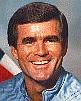
Veach was selected as an astronaut candidate in May 1984, and became an astronaut in June 1985. He held a variety of technical assignments, and had flown as a mission specialist on two Space Shuttle missions, STS-39 in 1991 and STS-52 in 1992. He had logged 436.3 hours in space. Most recently, Lacy had worked as the lead astronaut for the development and operation of robotics for the International Space Station.
On STS-39, Veach was responsible for operating a group of instruments which included an ultraviolet astronomical camera, an x-ray telescope, and a liquid helium-cooled infrared telescope which performed landmark observations of the Earth's atmosphere and the Aurora Australis (the Southern Lights). The 8-day unclassified Department of Defense mission aboard the Orbiter Discovery launched from the Kennedy Space Center in Florida on April 28, 1991, and landed at Kennedy on May 6, 1991.
STS-52 was a 10-day mission aboard the Orbiter Columbia during which the crew successfully deployed the Laser Geodynamic Satellite (LAGEOS), a joint Italian-American project. They also operated the first U.S. Microgravity Payload (USMP) with French and American experiments. Veach was the primary Remote Manipulator System (RMS) operator on the mission, supporting the initial flight tests of the Canadian-built Space Vision System (SVS). STS-52 launched from the Kennedy Space Center in Florida on October 22, 1992, and landed at Kennedy on November 1, 1992.
Lacy Veach died in Houston, Texas, on October 3, 1995, of cancer.
Manned seven crew. Deployed USA 70, CRO A, CRO B, CRO C; deployed and retrieved IBSS. Payloads: Infrared Background Signature Survey (lBSS), Air Force Program (AFP)-675, Space Test Payload (STP)-I, Multi-Purpose Experiment Canister (MPEC), Cloud Logic to Optimize Use of Defense Systems (CLOUDS)-1A, Radiation Monitoring Equipment (RME)-lll.
Deployed Lageos 2, CTA. Payloads: Laser Geodynamic Satellite (LAGEOS) II/ Italian Research Interim Stage (IRIS), Canadian Experiments (CANEX) 2, United States Micro-gravity Payload (USMP) 1, Attitude Sensor Pack-age (ASP), Tank Pressure Control Experiment (TPCE), Physiological Systems Experiment (PSE), Heat Pipe Performance (HPP) experiment, Commercial Protein Crystal Growth (CPCG), Shuttle Plume Impingement Experiment (SPIE), Commercial Materials ITA Experiment (CMIX), Crystals by Vapor Transport Experiment (CVTE).