| astronautix.com | van Hoften |
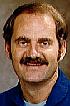
NAME: James D. A. (nickname "Ox") van Hoften
(Ph.D.)
NASA Astronaut (former)
PERSONAL DATA: Born June 11, 1944, in Fresno, California, but considers Burlingame, California, to be his hometown. Married. Three children. He enjoys skiing, playing handball and racquetball, and jogging.
EDUCATION: Graduated from Mills High School, Millbrae, California, in 1962; received a bachelor of science degree in Civil Engineering from the University of California, Berkeley, in 1966; and a master of science degree in Hydraulic Engineering and a doctor of philosophy in Hydraulic Engineering from Colorado State University in 1968 and 1976, respectively.
ORGANIZATIONS: Member of the American Institute of Aeronautics and Astronautics (AIAA), Sigma Xi, Chi Epsilon, and Pi Kappa Alpha.
SPECIAL HONORS: Meritorious Service Medal, 2 Navy Air Medals, National Defense Service Medal, Vietnam Service Medal, and 2 NASA Space Flight Medals.
EXPERIENCE: From 1969 to 1974, van Hoften was a pilot
in the United States Navy. He received flight training at Pensacola, Florida,
and completed jet pilot training at Beeville, Texas, in November 1970. He was
then assigned to the Naval Air Station, Miramar, California, to fly F-4
Phantoms, and subsequently to VF-121 Replacement Air Group. As a pilot with
VF-154 assigned to the carrier USS RANGER in 1972, van Hoften participated in
two cruises to Southeast Asia where he flew approximately 60 combat missions. He
resumed his academic studies in 1974 and completed a dissertation on the
interaction of waves and turbulent channel flow for his doctorate. In September
1976, he accepted an assistant professorship of Civil Engineering at the
University of Houston, and until his selection as an astronaut candidate, taught
fluid mechanics and conducted research on biomedical fluid flows concerning
flows in artificial internal organs and valves. Dr. van Hoften has published a
number of papers on turbulence, waves, and cardiovascular flows. From 1977 until
1980 he flew F4N's with Naval Reserve Fighter Squadron 201 at NAS Dallas and
then three years as a member of the Texas Air National Guard with the 147th
Fighter Interceptor Group as a pilot in the F4C.
He has logged 3,300 hours flying time, the majority in jet aircraft.
NASA EXPERIENCE: Dr. van Hoften was selected as an
astronaut candidate by NASA in January 1978. He completed a 1-year training and
evaluation period in August 1979.
From 1979 through the first flight, STS-1, van Hoften supported the Shuttle
entry and on-orbit guidance, navigation and flight control testing at the Flight
Systems Laboratory at Downey, California. Subsequently he was lead of the
Astronaut Support Team at Kennedy Space Center, Florida, responsible for the
Space Shuttle turn-around testing and flight preparations. He served as a
mission specialist on STS-41C in 1984, and STS-51I in 1985. Dr. Van Hoften has
logged a total 338 hours in space, including 22 hours of EVA flight time.
POST-NASA: Dr. van Hoften joined the Bechtel Corporation in 1986 and for 6 years managed Bechtel's engineering and construction business for the defense and space markets. He is currently Senior Vice President and a partner in Bechtel and is presently located in Hong Kong as project manager for the New Hong Kong Airport and Related Infrastructure program.
SPACE FLIGHT EXPERIENCE: STS-41C Challenger
(April 6-13, 1984) was launched from the Kennedy Space Center, Florida, and
returned to land at Edwards Air Force Base, California. During the 7-day mission
the crew successfully deployed the Long Duration Exposure Facility (LDEF);
retrieved the ailing Solar Maximum Satellite, repaired it on-board the orbiting Challenger
and replaced it in orbit, using the robot arm called the Remote Manipulator
System (RMS). The mission also included flight testing of Manned Maneuvering
Units (MMU's) in two extravehicular activities (EVA's); operation of the Cinema
360 and IMAX Camera Systems, as well as a Bee Hive Honeycomb Structures student
experiment. Mission accomplished in 107 Earth orbits in 167 hours, 40 minutes, 7
seconds.
STS-51I Discovery (August 27 to September 3, 1985) launched from the
Kennedy Space Center, Florida, and returned to land at Edwards Air Force Base,
California. During this mission the crew successfully deployed three
communications satellites, the Navy's Syncom IV-4, Australian Aussat, and
American Satellite Company's ASC-1. The crew also performed the successful
salvage of the ailing Navy Syncom IV-3 satellite. These tasks included two
Extravehicular Activities (EVA's) in which Dr. van Hoften attached to the Remote
Manipulator System (RMS) performed the first manual grapple and manual
deployment of a satellite in orbit. The mission also included the Physical Vapor
Transport of Organic Solids (PVTOS), the second material processing experiment
to be flown aboard a Shuttle for 3M. Mission accomplished in 112 orbits of the
Earth in 171 hours, 17 minutes, 42 seconds.
DECEMBER 1993
Manned five crew. First repair on orbit of a satellite, Solar Maximum Mission, by James van Hoften and George Nelson. Deployed LDEF. Payloads:Solar Maximum Mission (SMM) repair, manned maneuvering unit (MMU) satellite support, deployment of Long-Duration Exposure Facility (LDEF) in earth orbit free drift. LDEF contained 57 experiments and weighed about 10,000 kg. Cinema 360 and IMAX 70-mm cameras.
Attempted capture of Solar Max satellite.
Successfully captured and repaired Solar Max satellite.
Manned five crew. Launched Aussat 1, ASC 1, Leasat 4; repaired Leasat 3. Payloads: Deploy ASC (American Satellite Company)-1 with Payload Assist Modue (PAM)-D. Deploy AUSSAT (Australian communications satellite)-1 with PAM-D. Deploy Syncom IV-4 communications satellite with its unique stage. Retrieve Leasat-3 communications satellite, repair and deploy by extravehicular activity (EVA) astronauts. Physical Vapor Transport Organic Solids (PVTOS) experiment.
Captured Syncom F3 and began repairs.
Completed Syncom F3 repairs and redeployed satellite.
Planned shuttle mission for deployment of Galileo spacecraft. Cancelled after Challenger disaster.