| astronautix.com | Thornton |
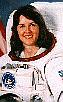
Dr. Thornton was a mission specialist on the crew of STS-33 which launched at night from Kennedy Space Center, Florida, on November 22, 1989, aboard the Space Shuttle Discovery. The mission carried Department of Defense payloads and other secondary payloads. After 79 orbits of the Earth, this five-day mission concluded on November 27, 1989, at Edwards Air Force Base, California.
On her second flight, Dr. Thornton served on the crew of STS-49, May 7-16, 1992, on board the maiden flight of the new Space Shuttle Endeavour. During the mission the crew conducted the initial test flight of Endeavour, performed a record four EVA's (space walks) to retrieve, repair and deploy the International Telecommunications Satellite (INTELSAT), and to demonstrate and evaluate numerous EVA tasks to be used for the assembly of Space Station Freedom. Dr. Thornton was one of two EVA crew members who evaluated Space Station assembly techniques on the fourth EVA. STS-49 logged 213 hours in space and 141 Earth orbits prior to landing at Edwards Air Force Base, California.
On her third flight, Dr. Thornton was a mission specialist EVA crew member aboard the Space Shuttle Endeavour on the STS-61 Hubble Space Telescope (HST) servicing and repair mission. STS-61 launched at night from the Kennedy Space Center, Florida, on December 2, 1993. During the 11-day flight, the HST was captured and restored to full capacity through a record five space walks by four astronauts. After having travelled 4,433,772 miles in 163 orbits of the Earth, the crew of Endeavour returned to a night landing at the Kennedy Space Center on December 13, 1993.
From October 20 to November 5, 1995, Dr. Thornton served aboard Space Shuttle Columbia on STS-73, as the payload commander of the second United States Microgravity Laboratory mission. The mission focused on materials science, biotechnology, combustion science, the physics of fluids, and numerous scientific experiments housed in the pressurized Spacelab module. In completing her fourth space flight, Dr. Thornton orbited the Earth 256 times, traveled over 6 million miles, and logged a total of 15 days, 21 hours, 52 minutes and 21 seconds in space.
Dr. Thornton has announced she will leave NASA on August 1, 1996, to join the faculty of the University of Virginia.
Manned five crew. Deployed a classified payload. Orbits of Earth: 78. Distance traveled: 3,218,687 km. Landed at: Concrete runway 04 at Edwards Air Force Base, Cali. Landing Speed: 368 kph. Touchdown miss distance: 570.00 m. Landing Rollout: 2,366.00 m. Payloads: DoD Mission - third space shuttle night launch.
Retrieved Intelsat 6 and attached new SRM. First active dual rendezvous of two orbiting spacecraft (Endeavour and Intelsat-Vl) First deployment of a drag chute on the orbiter fleet. Payloads: Intelsat-Vl reboost mission hardware, Assembly of Station by EVA Methods (ASEM), Commercial Protein Crystal Growth (CPCG), Air Force Maui Optical Site (AMOS) Calibration Test, Ultraviolet Plume Instrument (UVPl).
Tested tools and techniques for assembly of the International Space Station.
Manned seven crew. Hubble repair mission. Conducted the most EVAs (5) on a Space Shuttle Flight to that date. Payloads: Hubble Space Telescope (HST) Servicing Mission (SM) 1, IMAX Camera, IMAX Cargo Bay Camera (ICBC), Air Force Maui Optical Site (AMOS).
Hubble Space Telescope Servicing Mission 1 - solar array replacement.
Hubble Space Telescope Servicing Mission 1 - COSTAR installation.
Carried USML-2 for microgravity experiments (attached to Columbia). Payloads: United States Microgravity Laboratory (USML) 2, Orbital Acceleration Research Experiment (OARE).