| astronautix.com | Thomas Andrew |
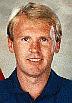
This was followed in 1983 by an appointment as the head of the Advanced Flight Sciences Department to lead a research department of engineers and scientists engaged in experimental and computational studies in fluid dynamics, aerodynamics and aeroacoustics. He was also manager of the research laboratory, the wind tunnels, and the test facilities used in these studies. In 1987, Dr. Thomas was named manager of Lockheed's Flight Sciences Division and directed the technical efforts in vehicle aerodynamics, flight controls and propulsion systems that supported the company's fleet of production aircraft.
In 1989, he moved to Pasadena, California, to join the Jet Propulsion Laboratory (JPL) and, shortly after, was appointed leader of the JPL program for microgravity materials processing in space. This NASA-sponsored research included scientific investigations, conducted in the laboratory and in low gravity on NASA's KC-135 aircraft, as well as technology studies to support the development of the space flight hardware for future Shuttle missions.
While awaiting space flight assignment, he supported shuttle launch and landing operations as an Astronaut Support Person (ASP) at the Kennedy Space Center. He also provided technical support to the Space Shuttle Main Engine project, the Solid Rocket Motor project and the External Tank project at the Marshall Space Flight Center.
In June 1995 he was named as payload commander for STS-77 and flew his first flight in space on Endeavour in May 1996. During this 10-day mission the crew of STS-77 deployed two satellites, tested a large inflatable space structure on orbit and conducted a variety of scientific experiments in a Spacehab laboratory module carried in Endeavour's payload bay. The flight was launched from the Kennedy Space Center on May 19, 1996 and completed 160 orbits 153 nautical miles above the Earth while traveling 4.1 million miles and logging 240 hours and 39 minutes in space.
Deployed and retrieved Spartan 2; deployed PAMS-STU; carried Spacehab module. Payloads: Shuttle Pointed Research Tool for Astronomy (SPARTAN) 207/Inflatable Antenna Experiment (IAE); Technology Experiments Advancing Missions in Space (TEAMS) 01 (includes Vented Tank Resupply Experiment (VTRE), Global Positioning System (GPS) Attitude and Navigation Experiment (GANE) (RME 1316), Liquid Metal Test Experiment (LMTE) and Passive Aerodynami-cally Stabilized Magnetically Damped Satellite (PAMS) Satellite Test Unit (STU); SPACEHAB-4; Brilliant Eyes Ten-Kelvin Sorption Cryocooler Experiment (BETSCE); 12 getaway specials attached to a GAS bridge assembly (GAS 056, 063, 142, 144, 163, 200, 490, 564, 565, 703, 741 and the Reduced-Fill Tank Pressure Control Experiment (RFTPCE); Aquatic Research Facility (ARF) 01; Biological Research in Canisters (BRIC) 07, Block III.
Penultimate Shuttle mission to Mir. Andy Thomas replaced David Wolf as the resident NASA astronaut. Endeavour docked with the SO module on Mir at 20:14 GMT on January 24, 1998.
Payloads included:
Despite fits problems with his Sokol emergency spacesuit, Andy Thomas replaced David Wolf as a Mir crew member on January 25. Endeavour undocked from Mir on January 29 at 16:57 GMT and made one flyaround of the station before departing and landing at Kennedy Space Center's runway 15 at 22:35 GMT on January 31.
Discovery was launched on mission STS-102 (Space Station flight 5A.1) into an initial 60 x 222 km x 51.6 deg orbit. The mission was delivery of supplies and equipment, and changeout of the Expedition One and Expedition Two station crews. STS-102 carried the Leonardo Multi Purpose Logistics Module (MPLM), built by Alenia Spazio (Torino), to the International Space Station. The MPLM was a descendant of the Spacelab long modules. Also carried was a Spacehab/Energia unpressurized Integrated Cargo Carrier with LCA/MTSAS-A, RU, and PFCS. A sidewall adapter beam with two GAS canisters (G-783 and WSVFM) was also on board. WSVFM measured vibration during launch. Another adapter beam, probably at the rear of the payload bay, carried SEM-9. SEM-9 and G-783 contained high school microgravity experiments.
Leonardo carried 16 'racks' of equipment, including the Human Research Facility Rack (Rack 13) which allowed the astronauts to do extensive medical experiments, the CHeCS Rack (28), the DDCU-1 and DDCU-2 racks (7 and 9), the Avionics-3 (Rack 6), and the MSS Avionics/Lab (Rack 11) and Avionics/Cupola (Rack 12) racks for a total of 7 equipment racks to be installed on Destiny. Three Resupply Stowage Racks (50, 51, 52) and four Resupply Stowage Platforms (180, 181, 182 and 188) remained installed on Leonardo, with their equipment bags being individually transferred to the Station. System Racks 2, 3, 4, 5 and 8 were already on Destiny together with stowage racks 110 through 117. Each rack had a mass of 150-300 kg.
The orbiter fired its OMS engines at 1221 GMT to raise the orbit to 185 x 219 km. Discovery docked with the PMA-2 port on the Station at 0639 GMT on March 10. The LCA (Lab Cradle Assembly) was attached to Destiny's +Z side during an EVA. It was to be used on the next mission to temporarily place a Spacelab pallet on Destiny during installation of the Station's robot arm. Later, it would be the site for the main Station truss, beginning with segment S0.
The PMA-3, on Unity at the -Z nadir position, had to be moved to the port position to make room for Leonardo. An external stowage platform was attached to Destiny and the External Stowage Platform and the PFCS Pump Flow Control System were added to the port aft trunnion on Destiny. A rigid umbilical (RU) was connected to the PDGF grapple fixture on Destiny to support the Station's future robot arm. Leonardo was docked to Unity at -Z for a while so that its cargo could be transferred to the station easily; it was then be returned to the payload bay and brought back to earth.
At 0232 GMT on March 19 command of ISS was transferred to Expedition 2 and the hatches were closed. Discovery undocked at 0432 GMT and flew once around the station before departing at 0548 GMT. ISS mass after undocking was 115527 kg. The OMS engines fired for the deorbit burn at 0625 GMT on March 21, and Discovery touched down on runway 15 at Kennedy Space Center at 0731 GMT.