| astronautix.com | Tanner |
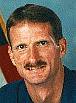
Selected as an astronaut candidate by NASA in March 1992, Tanner reported to the Astronaut Office in August 1992. He completed one year of initial training and worked in the Shuttle Avionics Integration Laboratory before being assigned to his first mission. Tanner also served as part of the Astronaut Support Personnel team at the Kennedy Space Center, supporting Space Shuttle launches and landings.
Tanner flew aboard the Space Shuttle Atlantis on the STS-66, November 3-14, 1994, performing the Atmospheric Laboratory for Applications and Science-3 (ATLAS-3) mission. ATLAS-3 was the third in a series of flights to study the Earth's atmosphere composition and solar effects at several points during the Sun's 11-year cycle. The mission also carried the CRISTA-SPAS satellite that was deployed to study the chemical composition of the middle atmosphere and retrieved later in the mission. Tanner logged 262 hours and 34 minutes in space and 175 orbits of the Earth.
Carried Atlas-3 laboratory; deployed and retrieved CRISTA-SPAS. Payloads: Atmospheric Laboratory for Applications and Science (ATLAS) 3, Cryogenic Infrared Spectrometers and Telescopes for the Atmo-sphere (CRISTA)-Shuttle Pallet Satellite (SPAS) 1, Experiment of the Sun for Complement-ing the ATLAS Payload for Education (ESCAPE) II, Inter-Mars Tissue Equivalent Proportional Counter (ITEPC), Shuttle Solar Backscatter Ultraviolet (SSBUV) A, Physiological and Anatomical Rodent Experiment (PARE/NIH-R), Protein Crystal Growth (PCG-TES and PCG-STES), Space Tissue Loss (STL/NIH-C-A), Shuttle Acceleration Measurement System (SAMS), Heat Pipe Performance (HPP).
After a spectacular night launch, the Shuttle completed its rendezvous with Hubble Space Telescope on February 13. Over the next four days five spacewalks were undertaken to renovate Hubble.
The Hubble Space Telescope was released back into orbit at 06:41 GMT on February 19. Discovery landed on Runway 15 at Kennedy Space Center at 08:32 GMT on February 21.
Hubble Space Telescope Servicing Mission 2 - Guidance sensor replacement.
Hubble Space Telescope Servicing Mission 2 - Solar array drive replacement.
Endeavour was launched on an assembly mission to the to the International Space Station. The external tank and the Orbiter entered a 74 x 325 km orbit at 0314 GMT. Endeavour's OMS burn raised its perigee to 205 km at around 0347 GMT; the ET re-entered over the Pacific. Endeavour docked with the Station's PMA-3 docking port at 1959 GMT on December 2. Astronauts then installed the P6 solar panel truss to the station during a series of spacewalks. The P6 was made up of the LS (Long Spacer), PV-1 IEA (Integrated Equipment Assembly) and the PVAA (Photovoltaic Array). The LS carried two Thermal Control Systems with radiators to eject waste heat from the Station; these radiators were to be moved to truss segments S4 and S6 later in assembly. The PVAA had solar array wings SAW-2B and SAW-4B, which deployed to a span of 73 meters. Only after completion of three station assembly space walks on December 3, 5, and 7 did the Endeavour crew enter the station (at 1436 GMT on December 8), delivering supplies to Alpha's Expedition One crew. Hatches were closed again at 1551 GMT December 9, and Endeavour undocked at 1913 GMT the same day. After one flyaround of the station, Endeavour fired its engines to depart the vicinity at 2017 GMT December 9. The deorbit burn was at 2158 GMT on December 11, changing the orbit from 351 x 365 km to 27 x 365 km, with landing at Runway 15 of Kennedy Space Center at 2303 GMT.
The payload bay of Endeavour for STS-97 contained a total cargo of 18740 kg:
The first STS-97 spacewalk began with airlock depress and hatch open at 1831 GMT on December 3. The suits went to battery power at 1835 GMT and Joe Tanner and Carlos Noriega left the airlock around 1845 GMT. Around 1932 GMT the RMS arm berthed P6 on the Z1 truss, and the astronauts manually latched it in place by 1940 GMT. There were some problems releasing latches on the solar array wings, but the first solar array began to deploy at 0123 GMT on December 4. This was the "starboard" (+X) array, wing SAW-2B. The port (-X) array, SAW-4B, was left undeployed. The astronauts closed the hatch at 0202 GMT on Dec 4 and repressurized at 0209 GMT. The P6 PVR radiator was deployed on the +Y side of the IEA at 0414 GMT on December 4. The SAW-4B wing was deployed starting at 0052 GMT on December 5.
The spacewalk began on December 5 with depress at 1718 GMT, hatch open around 1719 GMT and battery power at 1721 GMT. Repress was at 2358 GMT. The astronauts connected up P6 to the station, inspected the tension wires on wing 2B, and relocated the S-band antenna to the top of P6. They unlatched the aft TCS radiator, which was deployed sometime early on December 6.
Astronauts Noriega and Tanner on December 7 performed EVA-3 to fix the tension in the SAW-2B solar array on the Station. Airlock depress was at 1609 GMT, hatch open at 1610 GMT and battery power at 1613 GMT. The astronauts left the airlock a few minutes later, probably about 1620 GMT. After fixing the solar array they installed the FPPU device to measure plasma conditions near the top of P6 and performed a few other minor tasks. They returned to the airlock at around 2110 GMT, closing the hatch at 2119 and repressurizing at 2122.