| astronautix.com | Shatalov |
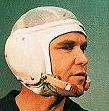
Planned duration 19 days. Biological endurance mission cancelled after near-disaster with Voskhod 2. Initial Orbit was to have been 175 km X 500 km at 65 deg. Follow-on missions with journalist, physician, and all-female crews also cancelled. Original Prime Crew was Katys, Volynov; Backup Crew: Beregovoi, Demin; Support Crew: Artyukhin, Shatalov. These assignments were reshuffled to those shown when Katys had to be dropped from the prime crew.
Planned second long-duration 20 day Voskhod flight. Cancelled in spring 1966 after near-disaster with Voskhod 2 and death of Korolev. A follow-on Voskhod 3V s/n 7 mission was also planned that would have conducted an artificial gravity experiment, unreeling a tether between the Voskhod spacecraft and the Block I final rocket stage.
Second manned Soyuz flight. Rendezvoused with the unmanned Soyuz 2 but failed to dock. Complex testing of spaceship systems; development, in joint flight with space ship Soyuz 2 of processes of space ship manoeuvring and docking in artificial earth satellite orbit; development of elements of celestial navigation; conduct of research under space flight conditions. The failed docking was blamed on manual control of the Soyuz by Beregovoi, who repeatedly put the spacecraft in an orientation that nulled the automatic docking system. Beregovoi used nearly all of his orientation fuel in his first attempt to dock - of 80 kg allocated, only 8 to 10 kg was remaining. Recovered October 30, 1968 7:25 GMT.
Carried Vladimir Shatalov; docked with Soyuz 5; returned with Yevgeni Khrunov, Alexsei Yeliseyev from Soyuz 5. Scientific, technical and medico-biological research, checking and testing of onboard systems and design elements of space craft, docking of piloted space craft and construction of an experimental space station, transfer of cosmonauts from one craft to another in orbit. Recovered January 17, 1969 06:51 GMT. This mission finally successfully completed the simulated lunar orbit docking and crew transfer mission attempted by Soyuz 1 in April 1967. In making the transfer Khrunov and Yeliseyev avoided the most spectacular survivable incident of the space age - the nose-first reentry of Soyuz 5, still attached to its service module.
Tested spacecraft systems and designs, manoeuvring of space craft with respect to each other in orbit, conducted scientific, technical and medico-biological experiments in group flight. Carried Vulkan welding furnace for vacuum welding experiments in depressurized orbital module. Was to have taken spectacular motion pictures of Soyuz 7 - Soyuz 8 docking but failure of rendezvous electronics in all three craft due to new helium pressurization integrity test prior to mission did not permit successful rendezvous and dockings. Recovered October 16, 1969 9:52 GMT.
Tested spacecraft systems and designs, manoeuvring of space craft with respect to each other in orbit, conducted scientific, technical and medico-biological experiments in group flight. Was to have docked with Soyuz 8 and transferred crew while Soyuz 6 took film from nearby. However failure of rendezvous electronics in all three craft due to a new helium pressurization integrity test prior to the mission did not permit successful rendezvous and dockings. Recovered October 17, 1969 9:26 GMT.
Tested spacecraft systems and designs, manoeuvring of space craft with respect to each other in orbit, conducted scientific, technical and medico-biological experiments in group flight. Was to have docked with Soyuz 7 and transferred crew while Soyuz 6 took film from nearby. However failure of rendezvous electronics in all three craft due to a new helium pressurization integrity test prior to the mission did not permit successful rendezvous and dockings. Recovered October 18, 1969 10:19 GMT.
The active spacecraft in the second planned test of the Kontakt lunar rendezvous/docking system.
Intended first space station mission; soft docked with Salyut 1. Soyuz 10 approached to 180 m from Salyut 1 automatically. It was hand docked after faillure of the automatic system, but hard docking could not be achieved because of the angle of approach. Post-flight analysis indicated that the cosmonauts had no instrument to proivde the angle and range rate data necessary for a successful manual docking. Soyuz 10 was connected to the station for 5 hours and 30 minutes. Despite the lack of hard dock, it is said that the crew were unable to enter the station due to a faulty hatch on their own spacecraft. When Shatalov tried to undock from the Salyut, the jammed hatch impeded the docking mechanism, preventing undocking. After several attempts he was unable to undock and land. During the landing, the Soyuz air supply became toxic, and Rukavishnikov (much like the case of Vance Brand during the Apollo ASTP return) was overcome and became unconscious. Recovered April 25, 1971 23:40 GMT. Landed 120 km NW Karaganda. Film and photos indicated that the docking system on the Salyut was not damaged, setting the stage for the Soyuz 11 mission.