| astronautix.com | Sega |
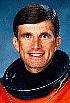
An Air Force Reserve Officer, he holds an aeronautical rating of Command Pilot and the rank of Colonel. He serves as a reserve augmentee to the Director, Plans, Air Force Space Command.
As a pilot, Dr. Sega has logged over 4,000 hours in the Air Force, Air Force Reserves, and NASA.
Selected by NASA in January 1990, Dr. Sega became an astronaut in July 1991, qualified for assignment as a mission specialist on Space Shuttle flight crews. His technical assignments have included: working Remote Manipulator System (RMS) issues for the Astronaut Office Mission Development Branch; supporting Orbiter software verification in the Shuttle Avionics Integration Laboratory (SAIL); Chief of Astronaut Appearances; Science Support Group Lead; Space Station integration team; Astronaut Representative to the Space Station Science and Utilization Advisory Board (primarily an external board for NASA).
Dr. Sega was a mission specialist on STS-60, the first joint U.S./Russian Space Shuttle Mission. Launched on February 3, 1994, STS-60 was the second flight of the Space Habitation Module-2 (Spacehab-2), and the first flight of the Wake Shield Facility (WSF-1). During the 8-day flight, the crew of Discovery conducted a wide variety of biological materials science, earth observation, and life science experiments. He was the "flight engineer" for ascent and entry on this mission, performed several experiments on orbit, and operated the robotic arm, berthing the Wake Shield onto its payload bay carrier on four separate occasions. Following 130 orbits of the Earth in 3,439,705 miles, STS-60 landed at Kennedy Space Center, Florida, on February 11, 1994. With the completion of his first space flight, Dr. Sega has logged 199 hours in space.
From November 1994 to March 1995, Dr. Sega was the NASA Director of Operations, Star City, Russia (The Gagarin Cosmonaut Training Center) responsible for managing NASA activities at Star City. These activities involved building an organization and infrastructure to support Astronaut and Cosmonaut mission and science training for flight on the Russian Space Station Mir. He also participated in training on Russian Space Systems and was the first American to train in the Russian EVA suit (Orlan) in their underwater facility (Hydrolaboratory).
Dr. Sega was a mission specialist on STS-76, the third docking mission to the Russian space station Mir, launched on March 22, 1996 with a crew of six aboard Atlantis. Following rendezvous and docking with Mir, a NASA Astronaut transferred to Mir for a five month stay to begin a continuous presence of U.S. astronauts aboard Mir for the next two year period. Dr. Sega was the Payload Commander for this mission and lead on Biorack, a small multipurpose laboratory located in the Spacehab module carried in the Shuttle payload bay. Biorack was used to technology development, fundamental biology (research into plant and animal cellular function), and environment characterization. He was responsible for planning and on-orbit operations, including extensive transfer of logistics and science, including 4800 pounds of science and mission hardware, food, water and air to Mir, and returning over 1100 pounds of U.S. and ESA science and Russian hardware. Following 144 orbits of the Earth, Atlantis landed with a crew of five at Edwards Air Force Base in California on March 31, 1996.
Dr. Sega left NASA on July 1, 1996 to become Dean of the College of Engineering and Applied Science, University of Colorado at Colorado Springs.
Deployed ODERACS A-F, Bremsat, carried Wake Shield Facility. Payloads: Wake Shield Facility (WSF) 1 and SPACEHAB 02. Getaway special bridge assembly experiments: Capillary Pumped Loop (CAPL), Orbital Debris Radar Calibration Spheres (ODERACS), University of Bremen Satellite (BREMSAT), G-514, G-071, and G-536. Shuttle Amateur Radio Experiment (SAREX) II; Auroral Photography Experiment (APE-B).
Shuttle-Mir Mission 3. Docked with the Mir space station 24 March 1996; Shannon Lucid was left on Mir for an extended stay. First American EVA on Mir. Payloads: SPACEHAB/Mir 03; KidSat; Shuttle Amateur Radio Experiment (SAREX) II, Configuration M; RME 1304�Mir/ Environmental Effects Payload (MEEP); orbiter docking system RME 1315; Trapped Ions in Space Experiment (TRIS); Extravehicular Activity Development Flight Test (EDFT) 04.