| astronautix.com | See |
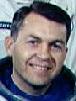
Born July 23, 1927, in Dallas, Texas. Bachelor of science from U.S. Merchant Marine Academy; master of science in engineering from University of California at Los Angeles. Died February 28, 1966, together with Gemini crew member Bassett in St. Louis, Missouri, in the crash of a T-38 jet into the McDonnell Aircraft plant where their spacecraft was being built.
Major objectives of the eight-day mission were evaluating the performance of the rendezvous guidance and navigation system, using a rendezvous evaluation pod (REP), and evaluating the effects of prolonged exposure to the space environment on the flight crew. Secondary objectives included demonstrating controlled reentry guidance, evaluating fuel cell performance, demonstrating all phases of guidance and control system operation needed for a rendezvous mission, evaluating the capability of either pilot to maneuver the spacecraft in orbit to rendezvous, evaluating the performance of rendezvous radar, and executing 17 experiments. The mission proceeded without incident through the first two orbits and the ejection of the REP. About 36 minutes after beginning evaluation of the rendezvous guidance and navigation system, the crew noted that the pressure in the oxygen supply tank of the fuel cell system was falling. Pressure dropped from 850 pounds per square inch absolute (psia) at 26 minutes into the flight until it stabilized at 70 psia at 4 hours 22 minutes, and gradually increased through the remainder of the mission. The spacecraft was powered down and the REP exercise was abandoned. By the seventh revolution, experts on the ground had analyzed the problem and a powering-up procedure was started. During the remainder of the mission the flight plan was continuously scheduled in real time. Four rendezvous radar tests were conducted during the mission, the first in revolution 14 on the second day; the spacecraft rendezvous radar successfully tracked a transponder on the ground at Cape Kennedy. During the third day, a simulated Agena rendezvous was conducted at full electrical load. The simulation comprised four maneuvers - apogee adjust, phase adjust, plane change, and coelliptical maneuver - using the orbit attitude and maneuver system (OAMS). Main activities through the fourth day of the mission concerned operations and experiments. During the fifth day, OAMS operation became sluggish and thruster No. 7 inoperative. Thruster No. 8 went out the next day, and the rest of the system was gradually becoming more erratic. Limited experimental and operational activities continued through the remainder of the mission. Retrofire was initiated in the 121st revolution during the eighth day of the mission, one revolution early because of threatening weather in the planned recovery area. Reentry and landing were satisfactory, but the landing point was 145 km short, the result of incorrect navigation coordinates transmitted to the spacecraft computer from the ground network. Landing occurred August 29, 190 hours 55 minutes after the mission had begun. The astronauts arrived on board the prime recovery ship, the aircraft carrier Lake Champlain, at 9:25. The spacecraft was recovered at 11:51 a.m.
With this flight, the US finally took the manned spaceflight endurance record from Russia, while demonstrating that the crew could survive in zero gravity for the length of time required for a lunar mission. However the mission was incredibly boring, the spacecraft just drifting to conserve fuel most of the time, and was 'just about the hardest thing I've ever done' according to a hyperactive Pete Conrad. An accident with freeze dried shrimp resulted in the cabin being filled with little pink subsatellites.
Elliot See and Charlie Bassett were the prime crew for Gemini 9. On February 28, 1966, they were flying in NASA T-38 trainers to visit the McDonnell plant in St Louis, where their spacecraft was in assembly. Bassett misjudged his landing approach, and in pulling up from the runway hit Building 101 where the spacecraft was being assembled. See, following in on Bassett's tail, followed in, and also hit the building. Both astronauts were killed, and 14 persons on the ground were injured. As a result, the Gemini 9 backup crew became the prime crew, and all subsequent crew assignments were reshuffled. This ended up determining who would be the first man on the moon....