| astronautix.com | Seddon |
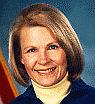
Dr. Seddon made her first space flight aboard STS 51-D, the fourth flight of Discovery and the sixteenth Shuttle mission. Launch was from Kennedy Space Center, Florida, on April 12, 1985. The crew deployed ANIK-C for Telesat of Canada, and Syncom IV-3 for the U.S. Navy. A malfunction in the Syncom spacecraft resulted in the first unscheduled EVA (spacewalk), rendezvous and proximity operations for the Space Shuttle in an attempt to activate the satellite using the Remote Manipulator System. Additionally, the STS-51D crew conducted several medical experiments, activated two "Getaway Specials," and filmed experiments with toys in space. After 168 hours of orbital operations, and 109 orbits of the Earth, Discovery landed on Runway 33 at the Kennedy Space Center on April 19, 1985.
Dr. Seddon next served on the crew of STS-40 Spacelab Life Sciences (SLS-1), a dedicated space and life sciences mission, which launched from the Kennedy Space Center, Florida, on June 5, 1991. SLS-1 was a nine-day mission during which crew members performed experiments which explored how humans, animals and cells respond to microgravity and re-adapt to Earth's gravity on return. Other payloads included experiments designed to investigate materials science, plant biology and cosmic radiation, and tests of hardware proposed for the Space Station Freedom Health Maintenance Facility. Following 146 orbits of the Earth, Columbia and her crew landed at Edwards Air Force Base, California, on June 14, 1991. Completion of this flight logged her an additional 218 hours in space.
On STS-58 Spacelab Life Sciences-2, Dr. Seddon served as Payload Commander on the seven-person life science research mission aboard the Space Shuttle Columbia, launching from the Kennedy Space Center on October 18, 1993, and landing at Edwards Air Force Base on November 1, 1993. This record duration fourteen-day Space Shuttle mission has been recognized by NASA management as the most successful and efficient Spacelab flight that NASA has flown. The crew performed neurovestibular, cardiovascular, cardiopulmonary, metabolic, and musculoskeletal medical experiments on themselves and 48 rats, expanding our knowledge of human and animal physiology both on earth and in space flight. In addition, the crew performed 10 engineering tests aboard the Orbiter Columbia and 9 Extended Duration Orbiter Medical Project experiments. The mission was accomplished in 225 orbits of the Earth in 336 hours, 13 minutes, 01 second.
As of September 1996, Dr. Seddon has been detailed by NASA to Vanderbuilt University Medical School in Nashville, Tennessee. She is assisting in the preparation of cardiovascular experiments which will fly aboard Space Shuttle Columbia on the Neurolab Spacelab flight in 1998.
Planned shuttle mission for deployment of commercial communications satellites. Cancelled due to payload delays.
Planned TDRS/IUS deployment shuttle mission. Cancelled due to IUS failure.
Manned seven crew. Payloads: Telesat (Canada communications satellite)-I with Payload Assist Module (PAM)-D deployment, Syncom IV-3 communications satellite deploy-ment with its unique stage (unique stage failed to ignite), Continuous Flow Electrophoresis (CFES), Phase Partitioning Experiment (PPE), student experiments, two getaway specials (GAS) Informal science studies (Toys in Space).
Carried Spacelab life sciences module. Payloads: Spacelab Life Sciences (SLS)-1 with long module, getaway special bridge assembly with 12 getaway specials, Physiological Monitoring System (PMS), Urine Monitoring System (UMS), Animal Enclosure Modules (AEM), Middeck Zero-gravity Dynamics Experiment (MODE), 7 Orbiter Experiments Program experiments.
Biological, microgravity experiments aboard Spacelab 2. Payloads: Spacelab Life Sciences (SLS) 2, Shuttle Amateur Radio Experiment (SAREX) II.