| astronautix.com | Runco |
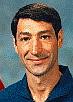
On his first flight, Runco served on the crew of STS-44 aboard Space Shuttle Atlantis which launched on the night of November 24, 1991. The primary mission objective was accomplished with the successful deployment of a Defense Support Program (DSP) satellite. In addition, the crew conducted two Military Man-in-Space experiements, three radiation monitoring experiments, and numerous medical tests in support of long duration space flights. The mission was concluded after completing 110 orbits of the Earth. Atlantis returned to a landing on the lakebed at Edwards Air Force Base, California, on December 1, 1991. Mission duration was 6 days, 22 hours and 50 minutes.
Runco next served as a mission specialist on the crew of STS-54 aboard Space Shuttle Endeavour. STS-54 (January 13-19, 1993) launched and landed at the Kennedy Space Center in Florida. The six-day mission featured the deployment of a $200-million NASA Tracking and Data Relay Satellite (TDRS-F). Also carried in the payload bay was the Diffuse X-Ray Spectrometer (DXS). This astronomical instrument scanned the local vicinity of the Milky Way galaxy in the direction of the Constellation Orion recording the low-energy X-ray emanations believed to originate from the plasma remnants of an ancient nearby supernova. The data collected by DXS will help scientists better understand stellar evolution. Crewmate Greg Harbaugh and Runco also became the 47th and 48th Americans to walk in space during a 4.5-hour space walk designed to evaluate the limits of human performance during extravehicular activities (EVA). The flight also conducted several medical and scientific experiments. Included in these were investigations to better understand the human immune system's response to cancer. The crew also demonstrated the physics principles of everyday toys to an interactive audience of elementary school students across the United States. Mission duration was 5 days, 23 hours and 38 minutes.
Runco most recently served as a mission specialist on the crew of STS-77 aboard the Space Shuttle Endeavour (May 19-29, 1996. STS-77 carried a number of technology development experiments as well as a suite of microgravity science experiments. The technology development experiments included two deployable satellites both of which were deployed by Runco. For the deploy of the Spartan/Inflatable Antenna Experiment Runco was the Remote Manipulator System operator. The other deployable was a small Satellite Test Unit (STU) which would use residual atmospheric drag and the Earth's magnetic field for attitude stabilization. STS-77 also featured the fourth flight of a SpaceHab module as an experiment laboratory. Mission duration was 10 days and 39 minutes.
Manned six crew. Deployed Defense Support Program satellite. Payloads: Defense Support Program satellite/ Inertial Upper Stage, Interim Operational Contamination Monitor, Terra Scout, Military Man in Space, Shuttle Activation Monitor, Cosmic Radiation Effects and Activation Monitor, Radiation Monitoring Equipment Ill, Air Force Maui Optical Site Calibration Test, Ultraviolet Plume Instrument, Visual Function Tester 1.
Manned five crew. Deployed TDRSS 6. Payloads: Tracking and Data Relay Satellite (TDRS)-F/Inertial Upper Stage (IUS); Diffuse X-ray Spectrometer (DXS); Chromosome and Plant Cell Division in Space (CHROMEX); Commercial Generic Bioprocessing Apparatus (CGBA) A; Physiological and Anatomical Rodent Experiment (PARE) 02; Solid Surface Combustion Experiment (SSCE).
Tested tools and techniques for extravehicular activity.
Deployed and retrieved Spartan 2; deployed PAMS-STU; carried Spacehab module. Payloads: Shuttle Pointed Research Tool for Astronomy (SPARTAN) 207/Inflatable Antenna Experiment (IAE); Technology Experiments Advancing Missions in Space (TEAMS) 01 (includes Vented Tank Resupply Experiment (VTRE), Global Positioning System (GPS) Attitude and Navigation Experiment (GANE) (RME 1316), Liquid Metal Test Experiment (LMTE) and Passive Aerodynami-cally Stabilized Magnetically Damped Satellite (PAMS) Satellite Test Unit (STU); SPACEHAB-4; Brilliant Eyes Ten-Kelvin Sorption Cryocooler Experiment (BETSCE); 12 getaway specials attached to a GAS bridge assembly (GAS 056, 063, 142, 144, 163, 200, 490, 564, 565, 703, 741 and the Reduced-Fill Tank Pressure Control Experiment (RFTPCE); Aquatic Research Facility (ARF) 01; Biological Research in Canisters (BRIC) 07, Block III.