| astronautix.com | Rominger |
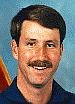
He has logged over 4,500 flying hours in over 35 types of aircraft and 685 carrier landings.
From October 20 to November 5, 1995, Rominger served as pilot aboard Space Shuttle Columbia on STS-73, the second United States Microgravity Laboratory mission. The mission focused on materials science, biotechnology, combustion science, the physics of fluids, and numerous scientific experiments housed in the pressurized Spacelab module. In completing his first space flight, Rominger orbited the earth 256 times, traveled over 6 million miles, and logged a total of 15 days, 21 hours, 52 minutes and 21 seconds in space.
From November 19 to December 7, 1996, Rominger served as pilot aboard Space Shuttle Columbia on STS-80. During the flight, the crew deployed and retrieved the Wake Shield Facility (WSF) and the Orbiting Retrievable Far and Extreme Ultraviolet Spectrometer (ORFEUS) satellites. The free-flying WSF created a super vacuum in its wake and grew thin film wafers for use in semiconductors and other high-tech electrical components. The ORFEUS instruments, mounted on the reusable Shuttle Pallet Satellite, studied the origin and makeup of stars. In completing his second spaceflight, Rominger orbited the earth a record 278 times, traveled over 7 million miles and logged 17 days, 15 hours and 53 minutes in space.
Carried USML-2 for microgravity experiments (attached to Columbia). Payloads: United States Microgravity Laboratory (USML) 2, Orbital Acceleration Research Experiment (OARE).
Mission STS-80 carried the Orfeus astronomy satellite, the Wake Shield Facility, and spacewalk equipment. The Orfeus satellite was deployed on November 20. It carried an ultraviolet telescope and spectrographs. Wake Shield Facility was deployed on November 22 and retrieved on November 26 . On 1996 Nov 29, crewmembers Tamara Jernigan and Thomas Jones were to conduct the first of several planned EVAs. However the shuttle's exit hatch would not open and NASA cancelled this and the other planned spacewalks of the mission. On December 4 at the astronauts retrieved the Orfeus satellite using the RMS arm. Reentry attempts on Dec 5 and Dec 6 were called off due to bad weather. Columbia finally landed at 11:49 GMT December 7 on Runway 33 at Kennedy Space Center, making STS-80 the longest shuttle mission to that date .
Deployed and retrieved the CRISTA-SPAS-2 (the Cryogenic Infrared Spectrometers and Telescopes for the Atmosphere-Shuttle Pallet Satellite-2) designed to study Earth's middle atmosphere. The CRISTA-SPAS-2 was making its second flight on the Space Shuttle and represented the fourth mission in a cooperative venture between the German Space Agency (DARA) and NASA.
CRISTA-SPAS was deployed by the RMS arm at 22:27 GMT on August 7 and was recaptured by Discovery's RMS arm at 15:14 GMT on August 16. Because of unfavorable weather conditions at the primary shuttle landing site at the Kennedy Space Center, Discovery was waved off for its scheduled August 18 landing. STS-85 landed the next day, at Kennedy Space Center at 11:08 GMT.
Discovery docked at the PMA-2 end of the International Space Station PMA-2/Unity/PMA-1/Zarya stack. The crew transferred equipment from the Spacehab Logistics Double Module in the payload bay to the interior of the station. Tammy Jernigan and Dan Barry made a space walk to transfer equipment from the payload bay to the exterior of the station. The ODS/EAL docking/airlock truss carried two TSA (Tool Stowage Assembly) packets with space walk tools. The Integrated Cargo Carrier (ICC), built by Energia and DASA-Bremen, carried parts of the Strela crane and the US OTD crane as well as the SHOSS box which contains three bags of tools and equipment to be stored on ISS's exterior.
The STS-96 payload bay manifest:
On May 30 at 02:56 GMT Tammy Jernigan and Dan Barry entered the payload bay of Discovery from the tunnel adapter hatch, and made a 7 hr 55 min space walk, transferring equipment to the exterior of the station.
On May 31 at 01:15 GMT the hatch to Unity was opened and the crew began several days of cargo transfers to the station. Battery units and communications equipment were replaced and sound insulation was added to Zarya. Discovery undocked from ISS at 22:39 GMT on June 3 into a 385 x 399 km x 51.6 degree orbit, leaving the station without a crew aboard. On June 5 the Starshine satellite was ejected from the payload bay. The payload bay doors were closed at around 02:15 GMT on June 6 and the deorbit burn was at 04:54 GMT. Discovery landed on runway 15 at Kennedy Space Center at 06:02 GMT.