| astronautix.com | Peterson |
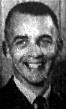
NAME: Donald H. Peterson (Colonel, USAF, ret.)
NASA Astronaut (former)
PERSONAL DATA: Born in Winona, Mississippi, on October 22, 1933. Married. Three children and four grandchildren.
EDUCATION: Graduated from Winona City High School, Winona, Mississippi; received a bachelor of science degree from the United States Military Academy at West Point, New York, in 1955, and a master's degree in Nuclear Engineering from the Air Force Institute of Technology, Wright-Patterson Air Force Base, Ohio, in 1962.
SPECIAL HONORS: Awarded the Air Force Commendation Medal, the Meritorious Service Medal, and the JSC Group Achievement Award (1972).
EXPERIENCE: Peterson graduated from West Point in 1955.
His assignments included four years as a flight instructor and military training
officer with the Air Training Command, three years as a nuclear systems analyst
with the Air Force Systems Command, and one year as a fighter pilot with
Tactical Air Command, including 3 months combat weapons training.
He is a graduate of the Aerospace Research Pilot School. Edwards Air Force Base,
California, and was one of the third group of astronauts assigned to the USAF
Manned Orbiting Laboratory Program.
He has logged over 5,300 hours flying time--including more than 5,000 hours in
jet aircraft.
NASA EXPERIENCE: Peterson became a NASA astronaut in
September 1969. He served on the astronaut support crew for Apollo 16.
Peterson retired from the United States Air Force with the rank of colonel after
having completed more than 24 years of active service, but continued his
assignment as a NASA astronaut in a civilian capacity. His areas of
responsibility have included engineering support, man/machine interface, and
safety assessment.
Peterson was a mission specialist on STS-6, which launched from Kennedy Space
Center, Florida, on April 4, 1983. He was accompanied by Mr. Paul J. Weitz
(spacecraft commander), Col. Karol J. Bobko (pilot), and Dr. F. Story Musgrave
(mission specialist). During this maiden voyage of the spacecraft Challenger,
the STS-6 crew conducted numerous experiments in materials processing, recorded
lightning activities, deployed the first Tracking and Data Relay Satellite (TDRS-A),
and activated three Getaway Specials. Peterson and Musgrave conducted an
extravehicular activity (EVA), commonly called a "spacewalk," to test
the new suit, the Shuttle airlock, and new tools and techniques for construction
and repair outside a spacecraft. After 120 hours of orbital operations STS-6
landed on the concrete runway at Edwards Air Force Base, California, on April 9,
1983. With the completion of this flight Don Peterson has logged 4 hours 15
minutes in extravehicular activity, and a total of 120 hours in space.
POST-NASA EXPERIENCE: Peterson resigned from the Astronaut Office in November 1984, and since that time has worked as a consultant in the area of manned aerospace operations.
MAY 1994
Apollo 19 was originally planned to land in the Hyginus Rille region, which would allow study of lunar linear rilles and craters.The original July 1972 landing date was extended when NASA cancelled the Apollo 20 mission in January 1970. Later planning indicated Copernicus as the most likely landing site for Apollo 19. Finally NASA cancelled Apollo 18 and 19 on 2 September 1970 because of congressional cuts in FY 1971 NASA appropriations.
Manned four crew. First flight of space shuttle Challenger; deployed TDRSS. Payloads: Deployment of Tracking and Data Relay Satellite (TDRS)-A with Inertial Upper Stage (lUS)-2, Continuous Flow Electrophoresis System (CFES), Monodisperse Latex Reactor (MLR), Night/Day Optical Survey of Lightning (NOSL) experiment, three getaway specials (GAS).
Tested EMU Manoeuvring Unit. Tested EVA emergency procedures.