| astronautix.com | Parazynski |
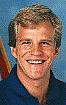
While in medical school he competed on the United States Development Luge Team and was ranked in the top 10 in the nation during the 1988 Olympic Trials. He also served as an Olympic Team Coach for the Philippines during the 1988 Olympic Winter Games in Calgary, Canada.
Carried Atlas-3 laboratory; deployed and retrieved CRISTA-SPAS. Payloads: Atmospheric Laboratory for Applications and Science (ATLAS) 3, Cryogenic Infrared Spectrometers and Telescopes for the Atmo-sphere (CRISTA)-Shuttle Pallet Satellite (SPAS) 1, Experiment of the Sun for Complement-ing the ATLAS Payload for Education (ESCAPE) II, Inter-Mars Tissue Equivalent Proportional Counter (ITEPC), Shuttle Solar Backscatter Ultraviolet (SSBUV) A, Physiological and Anatomical Rodent Experiment (PARE/NIH-R), Protein Crystal Growth (PCG-TES and PCG-STES), Space Tissue Loss (STL/NIH-C-A), Shuttle Acceleration Measurement System (SAMS), Heat Pipe Performance (HPP).
Atlantis was launched on a mission to the Russian Mir space station. The TI rendevous terminal initiation burn was carried out at 17:32 GMT on September 27, and Atlantis docked with the SO (Docking Module) on the Mir complex at 19:58 GMT. The crew exchange was completed on September 28, with David Wolf replacing Michael Foale on the Mir crew. On October 1 cosmonaut Titov and astronaut Parazynski conducted a spacewalk from the Shuttle payload bay while Atlantis was docked to Mir. They retrieved four MEEP (Mir Environmental Effects Payload ) exposure packages from Mir's SO module and installed the Spektr solar array cap. The MEEP experiments had been attached to the Docking Module by astronauts Linda Godwin and Rich Clifford during Shuttle mission STS-76 in March 1996. In addition to retrieving the MEEP, Parazynski and Titov were to continue an evaluation of the Simplified Aid For EVA Rescue (SAFER), a small jet-backpack designed for use as a type of life jacket during station assembly.
Atlantis undocked from Mir at 17:28 GMT on October 3 and conducted a flyaround focused on the damaged Spektr Module to determine the location of the puncture in its hull. The Mir crew pumped air into the Spektr Module using a pressure regulator valve, and the Shuttle crew observed evidence that, as expected, the leak seemed to be located at the base of the damaged solar panel. Final separation of Atlantis from Mir took place around 20:28 GMT. After two landing attempts were waved off on October 5 due to heavy cloud cover, the crew fired the engines to deorbit at 20:47 GMT on October 6 and landed at Kennedy Space Center at 21:55.
Retrieved MEEP materials exposure experiment from outside of Mir.
The flight of STS-95 provoked more publicity for NASA than any other flight in years, due to the presence of ex-astronaut Senator John Glenn on the crew, which also included the first Spanish astronaut, Pedro Duque. The US Navy PANSAT student satellite was deployed on Oct 30 into a 550 km x 561 x 28.5 degree orbit. The Spartan 201 satellite was deployed from Discovery on November 1 and retrieved on November 3. Spartan 201 was on its fifth mission to observe the solar corona. The data on this mission would be used to recalibrate the SOHO satellite which recently resumed observation of the Sun following loss of control. Discovery landed at 17:03:31 GMT November 7 on Runway 33 at the Shuttle Landing Facility at Kennedy Space Center.