| astronautix.com | Nikolayev |
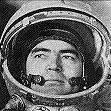
Second manned orbital flight. The Soviet Union successfully launched Vostok II into orbit with Gherman S. Titov as pilot. The spacecraft carried life-support equipment, radio and television for monitoring the condition of the cosmonaut, tape recorder, telemetry system, biological experiments, and automatic and manual control equipment. After 17.5 orbits, the spacecraft reentered on August 7 and landed safely at 7:18 GMT near Krasny Kut, Saratov. Titov made a separate parachute landing in an ejector couch. Flight objectives: Investigation of the effects on the human organism of a prolonged flight in orbit and subsequent return to the surface of the Earth; investigation of man's ability to work during a prolonged period of weightlessness. Titov took manual control of spacecraft but suffered from space sickness. He was equipped with a professional quality Konvas movie camera, with which ten minutes of film of the earth were taken through the porthole. Both television and film images were taken of the interior of the spacecraft. Like Gagarin, Titov experienced problems with separation of the service module after retrofire. Titov was never to fly again, after being assigned to the Spiral spaceplane, which turned out to be a dead-end project. A biography of him by Martin Caidin ('I Am Eagle') made him somewhat more accessible than Gagarin to the West.
Joint flight with Vostok 4. The first such flight, where Vostok capsules were launched one day apart, coming within a few kilometers of each other at the orbital insertion of the second spacecraft. The flight was supposed to occur in March, but following various delays, one of the two Vostok pads was damaged in the explosion of the booster of the third Zenit-2 reconnsat in May. Repairs were not completed until August. Vostok 3 studied man's ability to function under conditions of weightlessness; conducted scientific observations; furthered improvement of space ship systems, communications, guidance and landing. Immediately at orbital insertion of Vostok 4, the spacecraft were less than 5 km apart. Popovich made radio contact with Cosmonaut Nikolayev. Nikolayev reported shortly thereafter that he had sighted Vostok 4. Since the Vostok had no maneuvering capability, they could not rendezvous or dock, and quickly drifted apart. The launches did allow Korolev to offer something new and different, and gave the launch and ground control crews practice in launching and handling more than one manned spacecraft at a time. The cosmonaut took colour motion pictures of the earth and the cabin interior. Recovered August 15, 1962 6:52 GMT. Landed 48:02N 75:45 E.
The first manned Soyuz flights were an attempt at an 'all up' manned rendezvous, docking, and crew transfer spectacular (eventually accomplished by Soyuz 4 and Soyuz 5). Komarov was the pilot for the Soyuz 1 active spacecraft, which would be launched first. Soyuz 2, with the crew of Bykovsky, Khrunov, and Yeliseyev would launch the following day, with Khrunov and Yeliseyev space-walking to Soyuz 1 and returning to earth with Komarov. Komarov's spacecraft developed serious problems after launch, including the failure of one of the spacecraft's solar panels to deploy. The Soyuz 2 crew were given the order to rendezvous with Soyuz 1 and to try during the planned EVA to unfold the undeployed solar panel. But the launch of Soyuz 2 was cancelled due to heavy rain at the cosmodrome. Low on power and battery reserves, Komarov made an attempt to land the following day. Parachute failure led to the crash of Soyuz 1 and the death of Komarov. After the disaster the Soyuz 2 spacecraft was checked, and the parachute system had the same technical failure. If Soyuz 2 had launched, the docking may have been successful, but then both spacecraft would have crashed on landing, killing four cosmonauts instead of one.
Tested spacecraft systems and designs, manoeuvring of space craft with respect to each other in orbit, conducted scientific, technical and medico-biological experiments in group flight. Was to have docked with Soyuz 7 and transferred crew while Soyuz 6 took film from nearby. However failure of rendezvous electronics in all three craft due to a new helium pressurization integrity test prior to the mission did not permit successful rendezvous and dockings. Recovered October 18, 1969 10:19 GMT.
Manned flight endurance test. Medico-biological, scientific and technical studies and experiments in prolonged orbital flight. Inconclusive results due to slow sun-oriented rotation of spacecraft to conserve fuel producing motion sickness in cosmonauts. Recovered June 19, 1970 11:59 GMT.