| astronautix.com | Newman |
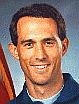
Selected by NASA in January 1990, Dr. Newman began a year of astronaut candidate training in July 1990 and became an astronaut in July 1991. His technical assignments since then include: Astronaut Office Mission Support Branch where he was part of a team responsible for crew ingress/strap-in prior to launch and crew egress after landing; Mission Development Branch working on the Shuttle on-board laptop computers; Chief of the Computer Support Branch in the Astronaut Office, responsible for crew involvement in the development and use of computers on the Space Shuttle and Space Station. A veteran of two space flights (STS-51 in 1993 and STS-69 in 1995), Newman has logged over 496 hours in space.
On his first flight, Newman was a mission specialist on STS-51, which launched on September 12, 1993. During the ten-day flight, the crew of five aboard the Shuttle Discovery deployed the Advanced Communications Technology Satellite (ACTS) and the Orbiting and Retrievable Far and Extreme Ultraviolet Spectrometer on the Shuttle Pallet Satellite (ORFEUS/SPAS). Newman was responsible for the operation of the SPAS, was the backup operator for the RMS, and on flight day five conducted a seven-hour spacewalk with Carl Walz. The extravehicular activity (EVA) tested tools and techniques for use on future missions. In addition to working with numerous secondary payloads and medical test objectives, the crew successfully tested a Global Positioning System (GPS) receiver to determine real-time Shuttle positions and velocities and completed a test routing Orbiter data to on-board laptop computers. After 158 orbits of the Earth in 236 hours, 11 minutes, the mission concluded on September 22, 1993, with the first night landing at the Kennedy Space Center, Florida.
Most recently, Newman was a mission specialist on STS-69 which launched on September 7, 1995. The crew successfully deployed and retrieved a SPARTAN satellite and the Wake Shield Facility (WSF). Also on board was the International Extreme Ultraviolet Hitchhiker payload, numerous secondary payloads, and medical experiments. Newman was responsible for the crew's science involvement with the WSF and was also the primary RMS operator on the flight, performing the WSF and EVA RMS operations. He also operated the on-orbit tests of the Ku-band Communications Adaptor, the Relative GPS experiment, and the RMS Manipulator Positioning Display. Endeavour landed at the Kennedy Space Center on September 18, 1995 after 171 orbits of the Earth in 260 hours, 29 minutes.
Deployed and retrieved Orfeus-SPAS. During the EVA conducted tests in support of the Hubble Space Telescope first servicing mission and future EVAs, including Space Station assembly and maintenance. First night landing at KSC. Payloads: Advanced Communication Technology Sat-ellite (ACTS)/Transfer Orbit Stage (TOS), Orbiting Retrievable Far and Extreme Ultraviolet Spectrometer�Shuttle Pallet Satellite (ORFEUS-SPAS) with Remote IMAX Camera System (RICS), Limited Duration Space Environ-ment Candidate Materials Exposure (LDCE) (Beam Configuration C), Commercial Protein Crystal Growth (CPCG Block II), Chromosome and Plant Cell Division in Space (CHROMEX), High Resolution Shuttle Glow Spectroscopy-A (HRSGS-A), Auroral Photography Experiment-B (APE-B), Investigation into Polymer Membrane Processing (IPMP), Radiation Monitoring Equip-ment (RME-III), Air Force Maui Optical Site Cal-ibration Test (AMOS), IMAX In-Cabin Camera.
Tested tools and techniques for extravehicular activity.
Deployed and retrieved Spartan 201, WSF 2. Payloads: Wake Shield Facility (WSF) 2; Shuttle Pointed Autonomous Research Tool for As-tronomy (SPARTAN) 201; International Extreme Ultraviolet Hitchhiker (IEH)1; Inter-Mars Tissue Equivalent Proportional Counter (ITEPC); Extravehicular Activity Development Flight Test (EDFT) 2; Capillary Pumped Loop (CAPL) 2/ getaway special (GAS) bridge assembly with five GAS payloads; Auroral Photography Experiment (APE) B; Biological Research in Canisters (BRIC); Commercial Generic Bioprocessing Apparatus (CGBA), Configuration A; Electrolysis Perfor-mance Improvement Concept Study (EPICS); Space Tissue Loss (STL)/National Institutes of Health (NIH) Cells (C); Commercial Middeck Instrumentation Technology Associates Experiment (CMIX).
First attempted launch of STS-88 was scrubbed at 09:03 GMT on December 3 due to a problem with a hydraulic system sensor. Launch came the next day, with Endeavour entering an initial 75 km x 313 km x 51.6 degree orbit. Half an orbit after launch, at 09:19 GMT, Endeavour fired its OMS engines to raise the orbit to 180 km x 322 km x 51.6 degree.
On December 5 at 22:25 GMT Nancy Currie unberthed the Unity space station node from the payload bay using the RMS arm. She then moved the Unity to a position docked to the Orbiter Docking System in the payload bay in readiness for assembly with the Russian-launched Zarya FGB ISS component. After rendezvous with the Zarya FGB module, on December 6 at 23:47 GMT Endeavour grappled Zarya with the robot arm, and at 02:07 GMT on December 7 it was soft docked to the PMA-1 port on Unity. After some problems hard dock was achieved at 02:48 GMT. Unity and Zarya then formed the core of the future International Space Station. Ross and Newman made three space walks to connect cables between Zarya and Unity, on December 7, 9 and 12. On the last EVA a canvas tool bag was attached to the exterior of Unity to provide tools for future station assembly workers. Docking cables were disconnected to prevent Unity and Zarya from inadvertently undocking. Following an internal examination of the embryonic space station, Endeavour undocked at 20:30 GMT on December 13. The SAC-A and Mightysat satellites were ejected from the payload bay on December 14 and 15. Deorbit burn was December 16 at 03:48 GMT, and Endeavour landed at 04:53:29 GMT, on Runway 15 at the Kennedy Space Center.
Payloads included:
Began assembly of International Space Station. Connected cables between Zarya and Unity modules.
Continued assembly of International Space Station. Connected cables between Zarya and Unity modules and deployed antennae.
Completed initial assembly of International Space Station. A canvas tool bag was attached to the exterior of Unity to provide tools for future assembly workers. Also disconnected some docking cables, so that Unity and Zarya could no longer undock.