| astronautix.com | McNair |
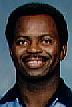
Official NASA Biography:
Ronald E. McNair was born on October 21, 1950 in Lake City, South Carolina. McNair was the son of Carl C. McNair, Sr., and Pearl M. McNair. He achieved early success in the segregated public schools he attended as both a student and an athlete. Valedictorian of his high school class, he attended North Carolina A&T State University where in 1971 he received a B.S. degree in physics. He went on to study physics at MIT, where he specialized in quantum electronics and laser technology, completing his Ph.D. in 1977. As a student he performed some of the earliest work on chemical HF/DF and high pressure CO lasers, publishing pathbreaking scientific papers on the subject.
McNair was also a physical fitness advocate and pursued athletic training from an early age. He was a leader in track and football at his high school. He also became a black belt in Karate, and while in graduate school began offering classes at St. Paul's AME Church in Cambridge, Massachusetts. He also participated in several Karate tournaments, taking more than 30 trophies in these competitions. While involved in these activities McNair met and married Cheryl B. Moore of Brooklyn, New York, and they later had two children. After completing his Ph.D. he began working as a physicist at the Optical Physics Department of Hughes Research Laboratories in Malibu, California, and conducted research on electro-optic laser modulation for satellite-to-satellite space communications.
This research led McNair into close contact with the space program for the first time, and when the opportunity presented itself he applied for astronaut training. In January 1978 NASA selected him to enter the astronaut cadre, one of the first three Black Americans selected. McNair became the second Black American in space between Febrary 3 and 11, 1984, by flying on the Challenger Shuttle mission STS-41-B. During this mission McNair operated the maneuverable arm built by Canada used to move payloads in space. The 1986 mission on which he was killed was his second Shuttle flight.
Manned five crew. Deployed Westar 6, Palapa B2; tested Manned Maneuvering Unit (MMU). Payloads: PALAPA-B2 (Indonesian communications satellite) with Payload Assist Module (PAM)-D and WESTAR (Western Union communications satellite)-Vl with PAM-D. Both satellites were deployed but the PAM-D in each satellite failed to ignite, leaving both satellites in earth orbit. Both satellites were retrieved and returned to earth for renovation on the STS-51-A mission. The manned maneuvering unit (MMU) was tested with extravehicular astronauts as free flyers without tethers as far as 98 m from the orbiter. Shuttle Pallet Satellite (SPAS)-01 experiments, Monodisperse Latex Reactor (MLR), Isoelectric Focusing Experiment (lEF), Acoustic Containerless Experiment System (ACES), Cinema 360 cameras, five getaway specials (GAS), Aerodynamic Coefficient Identification (ACIP)/High Resolution Accelerom-eter Package (HIRAP).
Exploded 73 seconds after launch, all 7 crewmembers were killed; carried TDRSS satellite.