| astronautix.com | Low |
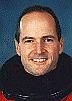
On his first mission, Low was a crew member on STS-32 which launched from the Kennedy Space Center, Florida, on January 9, 1990. On board the Orbiter Columbia the crew successfully deployed the Syncom IV-F5 communications satellite, and retrieved the 21,400-pound Long Duration Exposure Facility (LDEF) using the RMS. They also operated a variety of middeck materials and life sciences experiments, as well as the IMAX camera. Following 173 orbits of the Earth in 261 hours, Columbia returned to a night landing at Edwards Air Force Base, California, on January 20, 1990.
Low next served as the flight engineer aboard the Orbiter Atlantis on STS-43. The nine-day mission launched from the Kennedy Space Center, Florida, on August 2, 1991. During the flight, crew members deployed the fifth Tracking and Data Relay Satellite (TDRS-E), in addition to conducting 32 physical, material, and life science experiments, mostly relating to the Extended Duration Orbiter and Space Station Freedom. After 142 orbits of the Earth in 213 hours, the mission concluded with a landing on Runway 15 at the Kennedy Space Center on August 11, 1991.
On STS-57, Low served as payload commander aboard the Orbiter Endeavour, which launched from the Kennedy Space Center, Florida, on June 21, 1993. The primary objective of this flight was the retrieval of the European Retrievable Carrier satellite (EURECA) using the RMS. Additionally, this mission featured the first flight of Spacehab, a commercially-provided middeck augmentation module for the conduct of microgravity experiments. Spacehab carried 22 individual flight experiments in materials and life sciences research. During the mission Low, along with crew mate Jeff Wisoff, conducted a 5-hour, 50-minute spacewalk during which the EURECA communications antennas were manually positioned for latching, and various extravehicular activity (EVA) tools and techniques were evaluated for use on future missions. Endeavour landed at the Kennedy Space Center on July 1, 1993, after 155 orbits of the Earth in 239 hours.
David Low left NASA in February 1996 to pursue an aerospace career with Orbital Sciences Corporation's Launch Systems Group in Dulles, VA.
Manned five crew. Deployed Leasat 5, retrieved LDEF. Night landing. Payloads: Deployment of Syncom IV-5, retrieval of Long Duration Exposure Facility (LDEF), Fluids Experiment Apparatus (FEA)-3, Protein Crystal Growth (PCG) III-2, Latitude/Longitude Locator (L3), American Flight Echocardiograph (AFE), Characterization of Neurospora Circadian Rhythms in Space (CNCR)-01, Air Force Maui Optical Site (AMOS)-4, Mesoscale Lightning Experiment (MLE), IMAX, Interim Operational Contamination Monitor (lOCM).
Manned five crew. Deployed TDRS 5 satellite. Payloads: Tracking and Data Relay Satellite (TDRS)-E/lnertial Upper Stage (lUS), Space Station Heatpipe Advanced Radiator Element (SHARE)-ll, Shuttle Solar Backscatter Ultraviolet (SSBUV) instrument 03, Optical Communications Through the Shuttle Window (OCTW), Air Force Maui Optical Site (AMOS) Calibration Test, Auroral Photography Experiment (APE)-B, Bioserve-lnstrumentation Technology Associates Materials Dispersion Apparatus (BlMDA)-02, Investigations Into Polymer Membrane Processing (IPMP)-03, Protein Crystal Growth Ill Block Il, Space Acceleration Measure-ment System (SAMS), Solid Surface Combustion Experiment (SSCE)-02, Tank Pressure Control Experiment (TPCE).
Manned six crew. Carried Spacehab 1; retrieved Eureca-1 spacecraft. Payloads: Spacehab 01, retrieval of European Retriev-able Carrier (EURECA) Satellite, Superfluid Helium On-Orbit Transfer (SHOOT), Consortium for Materials Development in Space Complex Autonomous Payload (CONCAP)-IV, Fluid Acquisition and Resupply Experiment (FARE), Shuttle Amateur Radio Experiment (SAREX) II, Air Force Maui Optical Site (AMOS), GAS bridge assembly with 12 getaway special payloads.
Latched Eureca antenna. Conducted tests to refine procedures for servicing of the Hubble Space Telescope and construction of the International Space Station