| astronautix.com | Leestma |
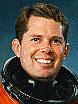
He has logged over 3,500 hours of flight time, including nearly 1,500 hours in the F-14A.
Following his flight Leestma served as a capsule communicator (CAPCOM) for STS-51C through STS-61A. He was then assigned as the Chief, Mission Development Branch, responsible for assessing the operational integration requirements of payloads that will fly aboard the Shuttle.
Leestma next served on the crew of STS-28, which launched from Kennedy Space Center, Florida, on August 8, 1989, aboard the Orbiter Columbia. The mission carried Department of Defense payloads and a number of secondary payloads. After 80 orbits of the Earth, this five-day mission concluded with a lakebed landing on Runway 17 at Edwards Air Force Base, California, on August 13, 1989.
From February 1990 to September 1991, when he started training for his third space mission, Leestma served as Deputy Director of Flight Crew Operations.
On March 24, 1992, Leestma and his crew mates launched from the Kennedy Space Center, Florida, aboard the Orbiter Atlantis on a nine-day mission to study atmospheric and solar phenomena. The mission carried the ATLAS-1 (Atmospheric Laboratory for Applications and Science) Spacelab aloft, as well as a number of additional secondary payloads. STS-45 landed on April 2, 1992 on Runway 33 at the Kennedy Space Center, Florida, after completing 142 orbits of the Earth.
A veteran of three space flights, Leestma has logged a total of 532.7 hours in space.
Leestma was assigned as Deputy Chief of the Astronaut Office, and was serving as Acting Chief of the Astronaut Office when selected to his present position in December 1992.
Manned seven crew. Deployed ERBS; performed high resolution Earth imagery. Payloads: Earth Radiation Budget Satellite (ERBS) deployment, Office of Space and Terrestrial Applications (OSTA)-3 experiments, Large Format Camera (LFC). First use of Orbital Refueling System (ORS) with extravehicular activity (EVA) astronauts, IMAX camera. In response to the American Strategic Defence Initiative and continued military use of the shuttle, the Soviet Union fired a 'warning shot' from the Terra-3 laser complex at Sary Shagan. The facility tracked Challenger with a low power laser on 10 October 1984. This caused malfunctions to on-board equipment and discomfort / temporary blinding of the crew, leading to a US diplomatic protest.
Simulated refuelling of satellite.
Planned Astro-1 shuttle mission. Cancelled after Challenger disaster.
Planned Department of Defense shuttle mission. Cancelled after Challenger disaster.
Manned five crew. Deployed 2 classified satellites. Landed at: Runway 17 dry lake bed at Edwards Air Force Base, . Landing Speed: 287 kph. Touchdown miss distance: 1,618.00 m. Landing Rollout: 1,833.00 m. Payloads: DoD Mission.
Manned seven crew. Carried ATLAS-1 experimental package. Payloads: Atmospheric Laboratory for Applications and Science (ATLAS)-1, Shuttle Solar Backscat-ter Ultraviolet (SSBUV)-4, Getaway Special Experiment G-229, Space Tissue Loss (STL)-1, Radiation Monitoring Equipment (RME)-lIl, Visual Function Tester (VFT)-lI, Cloud Logic To Opti-mize Use of Defense Systems (CLOUDS)-1A, Investigations Into Polymer Membrane Process-ing (IPMP), Shuttle Amateur Radio Experiment (SAREX)-Il, Ultraviolet Plume Instrument (UVPl).