| astronautix.com | Helms |
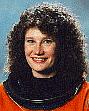
As a flight test engineer, Helms has flown in 30 different types of U.S. and Canadian military aircraft.
Selected by NASA in January 1990, Helms became an astronaut in July 1991. She is qualified for assignment as a mission specialist on future Space Shuttle flight crews. Her technical assignments to date include working RMS/robotics issues in the Mission Development Branch of the Astronaut Office, and as a CAPCOM (spacecraft communicator) for STS-57, STS-51, STS-58, STS-60 & STS-61. She is currently the Branch Chief for Payloads/Habitability for the Astronaut Office. A veteran of three space flights, Helms has orbited the Earth 544 times, traveled over 14 million miles, and has logged a total of 33 days, 20 hours, 17 minutes, and 17 seconds in space.
On her first mission, Helms flew on the crew of STS-54, January 13-19, 1993. The primary objective was the deploy of a $200-million NASA Tracking and Data Relay Satellite (TDRS-F). A Diffuse X-Ray Spectrometer (DXS) carried in the payload bay, collected over 80,000 seconds of quality X-ray data that will enable investigators to answer questions about the origin of the Milky Way galaxy. The crew demonstrated the physics principles of everyday toys to an interactive audience of elementary school students across the United States. A highly successful Extravehicular Activity (EVA) resulted in many lessons learned that will benefit Space Station Freedom assembly. Mission duration was 5 days, 23 hours, 38 minutes, 17 seconds.
On STS-64, September 9-20, 1994, Helms was the flight engineer for orbiter operations and the primary RMS operator aboard Space Shuttle Discovery. The major objective of this flight was to validate the design and operating characteristics of Lidar in Space Technology Experiment (LITE) by gathering data about the Earth's troposphere and stratosphere. Additional objectives included the deploy and retrieval of SPARTAN-201, a free-flying satellite that investigated the physics of the solar corona, and the testing of a new EVA maneuvering device. The Shuttle Plume Impingement Flight Experiment (SPIFEX) was used to collect extensive data on the effects of jet thruster impingement, in preparation for proximity tasks such as space station docking. Mission duration was 10 days, 22 hours, 51 minutes.
On STS-78, June 20 to July 7, 1996, Helms was the payload commander and flight engineer aboard Columbia, on the longest Space Shuttle mission to date. The mission included studies sponsored by ten nations and five space agencies, and was the first mission to combine both a full microgravity studies agenda and a comprehensive life science investigation. The Life and Microgravity Spacelab mission served as a model for future studies on board the International Space Station. Mission duration was 16 days, 21 hours, 48 minutes.
In completing three missions, Helms has orbited the Earth 544 times, traveled over 14 million miles, and has logged a total of 912 hours, 17 minutes, and 17 seconds in space.
Manned five crew. Deployed TDRSS 6. Payloads: Tracking and Data Relay Satellite (TDRS)-F/Inertial Upper Stage (IUS); Diffuse X-ray Spectrometer (DXS); Chromosome and Plant Cell Division in Space (CHROMEX); Commercial Generic Bioprocessing Apparatus (CGBA) A; Physiological and Anatomical Rodent Experiment (PARE) 02; Solid Surface Combustion Experiment (SSCE).
Payloads: Lidar In-Space Technology Experiment (LITE), Shuttle Pointed Autonomous Research Tool for Astronomy (SPARTAN) 201-II, Robot-Operated Materials Processing System (ROMPS), Shuttle Plume Impingement Flight Experiment (SPIFEX), getaway special (GAS) bridge assembly with ten GAS experiments, Trajectory Control Sensor (TCS), Simplified Aid for EVA Rescue (SAFER), Solid Surface Combustion Experiment (SSCE), Biological Research in Canisters (BRIC) III, Radiation Monitoring Experiment (RME) III, Military Applications of Ship Tracks (MAST), Shuttle Amateur Radio Experiment (SAREX) II, Air Force Maui Optical Site (AMOS) Calibration Test.
Carried Life and Microgravity Spacelab; human biological and microgravity experiments. Landed KSC July 7.
Objective of mission STS-101 was repair, resupply and construction tasks aboard the international space station. This was the first launch with new electronic cockpit displays and other upgrades. The solid boosters separated at 10:13 GMT and the main engines cutoff at 10:19 GMT. The external tank, ET-102 then separated, with both orbiter and ET-102 in a 52 x 320 km initial orbit. At 10:54 GMT the OMS engines fired to raise perigee to 159 x 329 km x at 51.6 deg. Atlantis docked with the International Space Station's PMA-2 docking adapter on the Unity node at 04:31 GMT on May 21. At that time the ISS was in a 332 x 341 km orbit.
On May 22 mission specialists Jeff Williams and James carried out external maintenance work on the ISS.
On May 23 at 00:03 GMT the Atlantis crew opened the first hatch to PMA-2 and entered the Station. The crew replaced a set of batteries in Zarya, installed fans and ducting to improve airflow, and delivered supplies and equipment. Three hour-long orbit raising burns on May 24 and 25 by the RCS engines on Atlantis raised the station to a 372 x 380 km x 51.6 deg orbit.
The STS-101 crew left the station on May 26, closing the PMA-2 hatch at 08:08 GMT and undocking at 23:03 GMT. Atlantis performed a 180 degree flyaround of the station and departed the vicinity around 23:44 GMT.
Atlantis closed its payload bay doors around 02:30 GMT on May 29 and fired the OMS engines for deorbit at 05:12 GMT. The vehicle landed on RW15 at Kennedy Space Center at 06:20 GMT. Atlantis was to be turned around for the next ISS shuttle flight, STS-106.
Left in orbit was the renovated International Space Station, equipped with an upgraded electrical system, new fans, filters, fire extinguishers, smoke detectors and communications gear.
Discovery was launched on mission STS-102 (Space Station flight 5A.1) into an initial 60 x 222 km x 51.6 deg orbit. The mission was delivery of supplies and equipment, and changeout of the Expedition One and Expedition Two station crews. STS-102 carried the Leonardo Multi Purpose Logistics Module (MPLM), built by Alenia Spazio (Torino), to the International Space Station. The MPLM was a descendant of the Spacelab long modules. Also carried was a Spacehab/Energia unpressurized Integrated Cargo Carrier with LCA/MTSAS-A, RU, and PFCS. A sidewall adapter beam with two GAS canisters (G-783 and WSVFM) was also on board. WSVFM measured vibration during launch. Another adapter beam, probably at the rear of the payload bay, carried SEM-9. SEM-9 and G-783 contained high school microgravity experiments.
Leonardo carried 16 'racks' of equipment, including the Human Research Facility Rack (Rack 13) which allowed the astronauts to do extensive medical experiments, the CHeCS Rack (28), the DDCU-1 and DDCU-2 racks (7 and 9), the Avionics-3 (Rack 6), and the MSS Avionics/Lab (Rack 11) and Avionics/Cupola (Rack 12) racks for a total of 7 equipment racks to be installed on Destiny. Three Resupply Stowage Racks (50, 51, 52) and four Resupply Stowage Platforms (180, 181, 182 and 188) remained installed on Leonardo, with their equipment bags being individually transferred to the Station. System Racks 2, 3, 4, 5 and 8 were already on Destiny together with stowage racks 110 through 117. Each rack had a mass of 150-300 kg.
The orbiter fired its OMS engines at 1221 GMT to raise the orbit to 185 x 219 km. Discovery docked with the PMA-2 port on the Station at 0639 GMT on March 10. The LCA (Lab Cradle Assembly) was attached to Destiny's +Z side during an EVA. It was to be used on the next mission to temporarily place a Spacelab pallet on Destiny during installation of the Station's robot arm. Later, it would be the site for the main Station truss, beginning with segment S0.
The PMA-3, on Unity at the -Z nadir position, had to be moved to the port position to make room for Leonardo. An external stowage platform was attached to Destiny and the External Stowage Platform and the PFCS Pump Flow Control System were added to the port aft trunnion on Destiny. A rigid umbilical (RU) was connected to the PDGF grapple fixture on Destiny to support the Station's future robot arm. Leonardo was docked to Unity at -Z for a while so that its cargo could be transferred to the station easily; it was then be returned to the payload bay and brought back to earth.
At 0232 GMT on March 19 command of ISS was transferred to Expedition 2 and the hatches were closed. Discovery undocked at 0432 GMT and flew once around the station before departing at 0548 GMT. ISS mass after undocking was 115527 kg. The OMS engines fired for the deorbit burn at 0625 GMT on March 21, and Discovery touched down on runway 15 at Kennedy Space Center at 0731 GMT.