| astronautix.com | Hawley |
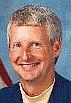
STS-41D launched from the Kennedy Space Center, Florida, on August 30, 1984. Crew members included Hank Hartsfield (spacecraft commander), Mike Coats (pilot), Judy Resnik and Mike Mullane (mission specialists), and Charlie Walker (payload specialist). This was the maiden flight of the Space Shuttle Discovery. During the 7-day mission the crew successfully activated the OAST-1 solar cell wing experiment, deployed the SBS-D, SYNCOM IV-2, and TELSTAR 3-C satellites, operated the CFES-III experiment, the student crystal growth experiment, as well as photography experiments using the IMAX motion picture camera. STS-41D completed 96 orbits of the Earth in 144 hours and 57 minutes before landing at Edwards Air Force Base, California, on September 5, 1984.
STS-61C launched from the Kennedy Space Center, Florida, on January 12, 1986. Crew members included Robert "Hoot" Gibson (spacecraft commander), Charles Bolden (pilot), Franklin Chang-D�az and George "Pinky" Nelson (mission specialists), Robert Cenker of RCA, and Congressman Bill Nelson (payload specialists). During the 6-day flight of Columbia the crew deployed the SATCOM KU satellite and conducted experiments in astrophysics and materials processing. Mission duration was 146 hours and 03 minutes. STS-61C made a successful night landing at Edwards Air Force Base, California, on January 18, 1986.
STS-31 launched on April 24, 1990, from the Kennedy Space Center in Florida. The crew aboard Space Shuttle Discovery included Loren Shriver (spacecraft commander), Charlie Bolden (pilot), Bruce McCandless and Kathy Sullivan (mission specialists). During the 5-day mission, crew members deployed the Hubble Space Telescope, and conducted a variety of middeck experiments involving the study of protein crystal growth, polymer membrane processing, and the effects of weightlessness and magnetic fields on an ion arc. They also operated a variety of cameras, including both the IMAX in-cabin and cargo bay cameras, for Earth observations from their record-setting altitude of 380 miles. Following 76 orbits of the earth in 121 hours, Discovery landed at Edwards Air Force Base, California, on April 29, 1990.
STS-82, the second Hubble Space Telescope (HST) maintenance mission, launched at night on February 11 and returned to a night landing at Kennedy Space Center on February 21, 1997. During the flight, Dr. Hawley's primary role was to operate the Shuttle's 50-foot robot arm to retrieve and redeploy the HST following completion of upgrades and repairs. Dr. Hawley also operated the robot arm during five space walks in which two teams installed two new spectrometers and eight replacement instruments. They also replaced insulation patches over three compartments containing key data processing, electronics and scientific instrument telemetry packages. HST was then redeployed and boosted to a higher orbit. The flight was completed in 149 orbits covering 3.8 million miles in 9 days, 23 hours, 37 minutes.
Planned TDRS/IUS deployment shuttle mission. Cancelled after IUS failures.
Manned six crew. First flight of space shuttle Discovery; deployed SBS 4, Leasat 1, Telstar 3C. Payloads: Satellite Business System (SBS)-D commu-nications satellite with Payload Assist Module (PAM)-D deployment, Syncom IV-2 communica-tions satellite with its unique stage deployment, Telstar (American Telephone and Telegraph) 3-C with PAM-D deployment, Office of Aeronautics and Space Technology (OAST)-1 experiments. Deployment and restowing of large solar array. Continuous Flow Electrophoresis (CFES). IMAX camera.
Manned seven crew. Launched Satcom K1. Payloads: Deploy SATCOM (RCA-Satellite Communi-cations) Ku-1 with Payload Assist Module (PAM)-D II. Materials Science Laboratory, Comet Halley Active Monitoring Experiment (CHAMP), Hitchhiker (HH) Goddard (G)-1, thirteen getaway specials (GAS), student experiment, Initial Blood Storage Equipment (lBSE), Characterization of Space Motion Sickness (SMS).
Planned shuttle mission for deployment of Hubble space telescope. Cancelled after Challenger disaster.
Deployed HST (Hubble Space Telescope). Payloads: Deployment of Hubble Space Telescope, IMAX camera in payload bay and in crew compartment, Protein Crystal Growth III-03, Investigation Into Polymer Membrane Process-ing- 01, Air Force Maui Optical Site-05, Radiation Monitoring Equipment III-01, Student Experiment 82-16, and Ascent Particle Monitor 01.
After a spectacular night launch, the Shuttle completed its rendezvous with Hubble Space Telescope on February 13. Over the next four days five spacewalks were undertaken to renovate Hubble.
The Hubble Space Telescope was released back into orbit at 06:41 GMT on February 19. Discovery landed on Runway 15 at Kennedy Space Center at 08:32 GMT on February 21.
STS-93 was first rolled out to pad 39B on June 7 1999. The Chandra/IUS-27 vehicle was placed in the payload canister on June 19. The first launch attempt was on July 20, but controllers aborted the launch at T-6 seconds, just before main engine ignition, due to a data spike in hydrogen pressure data. This was determined to be due to a faulty sensor and a second attempt was on July 22. A lightning storm prevented launch during the 46 minute window, and the launch was again scrubbed. Finally the vehicle lifted off the pad on July 23, but five seconds after launch a short in an electrical bus brought down two of the three main engine controllers. Backup controllers took over, but a further failure on the backup controller bus would have resulted in engine shutdown and the first ever attempt at an RTLS (Return To Launch Site) abort. To further complicate matters engine 3 (SSME 2019) had a hydrogen leak throughout the ascent, causing the engine to run hot. Controllers sweated as temperatures neared redline. The hot engine�s controller compensated as programmed by using additional liquid oxygen propellant. The final result was that the shuttle ran out of gas - main engine cut-off (MECO) was at 04:39 GMT, putting Columbia into a 78 km x 276 km x 28.5 degree transfer orbit. Columbia was 1,700 kg short of oxygen propellant and 5 meters/sec slower than planned. The OMS-2 engine burn at 05:12 GMT circularised the orbit 10 km lower than planned.
The orbiter payload bay contained only the Chandra spacecraft, the IUS, and the IUS tilt tableTthe following payloads were carried in the shuttle�s cabin: STL-B (Space Tissue Loss), CCM (Cell culture module), SAREX-II (Shuttle Amateur Radio Experiment), EarthKam, PGIM (Plant Growth Investigations in Microgravity), CGBA (Commercial Generic Bioprocessing Apparatus), MEMS (Micro-electric Mechanical System), and BRIC (Biological Research in Canisters) and SWUIS (the Southwest Ultraviolet Imaging System, an 0.18-m UV telescope to be used for airglow and planetary observations); GOSAMR (the Gelation of Sols: Applied Microgravity Research experiment) and LFSAH, the Lightweight Flexible Solar Array Hinge. MSX and SIMPLEX experiments were also to be carried out.
Chandra/IUS-27 was deployed from Columbia at 11:47 GMT July 23. Flight duration was limited; this was the heaviest shuttle (122,534 kg) and heaviest payload (19,736 kg) to that date. Columbia landed at 03:20 GMT on July 28 on runway 33 at Kennedy Space Center. Post-flight inspection found the presence of holes in the cooling lines on the nozzle of SSME 2019 (engine 3) which caused a hydrogen leak. A loose repair pin in the engine broke free and caused the failure. The cause of the short was found to be chaffed wiring inside the shuttle. The entire fleet was grounded for inspection and replacement of wiring as necessary.