| astronautix.com | Garneau |
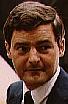
STS-41G (October 5-13, 1984) was an eight-day mission aboard Space Shuttle Challenger. Dr. Garneau was the first Canadian to fly on NASA's first mission to carry a seven-person crew. During 133 orbits of the earth in 3.4 million miles, the crew deployed the Earth Radiation Budget Satellite, conducted scientific observations of the earth with the OSTA-3 pallet and Large Format Camera (LFC), performed numerous in-cabin experiments, activated eight "Getaway Special" canisters, and demonstrated potential satellite refueling with an EVA and associated hydrazine transfer. Mission duration was 197 hours 23 minutes.
STS-77 (May 19-29, 1996) was a ten-day mission aboard Space Shuttle Endeavour. During 160 orbits of the earth in 4.1 million miles, the crew deployed two satellites ( the SPARTAN satellite which carried the Inflatable Antenna Experiment designed to test the concept of large, inflatable space structures, and the small Satellite Test Unit designed to test the concept of self-stabilization by using aerodynamic forces and magnetic damping, conducted twelve materials processing, fluid physics and biotechnology experiments in the Spacehab laboratory module carried in Endeavour's payload bay. Mission duration was 240 hours and 39 minutes.
Manned seven crew. Deployed ERBS; performed high resolution Earth imagery. Payloads: Earth Radiation Budget Satellite (ERBS) deployment, Office of Space and Terrestrial Applications (OSTA)-3 experiments, Large Format Camera (LFC). First use of Orbital Refueling System (ORS) with extravehicular activity (EVA) astronauts, IMAX camera. In response to the American Strategic Defence Initiative and continued military use of the shuttle, the Soviet Union fired a 'warning shot' from the Terra-3 laser complex at Sary Shagan. The facility tracked Challenger with a low power laser on 10 October 1984. This caused malfunctions to on-board equipment and discomfort / temporary blinding of the crew, leading to a US diplomatic protest.
Deployed and retrieved Spartan 2; deployed PAMS-STU; carried Spacehab module. Payloads: Shuttle Pointed Research Tool for Astronomy (SPARTAN) 207/Inflatable Antenna Experiment (IAE); Technology Experiments Advancing Missions in Space (TEAMS) 01 (includes Vented Tank Resupply Experiment (VTRE), Global Positioning System (GPS) Attitude and Navigation Experiment (GANE) (RME 1316), Liquid Metal Test Experiment (LMTE) and Passive Aerodynami-cally Stabilized Magnetically Damped Satellite (PAMS) Satellite Test Unit (STU); SPACEHAB-4; Brilliant Eyes Ten-Kelvin Sorption Cryocooler Experiment (BETSCE); 12 getaway specials attached to a GAS bridge assembly (GAS 056, 063, 142, 144, 163, 200, 490, 564, 565, 703, 741 and the Reduced-Fill Tank Pressure Control Experiment (RFTPCE); Aquatic Research Facility (ARF) 01; Biological Research in Canisters (BRIC) 07, Block III.
Endeavour was launched on an assembly mission to the to the International Space Station. The external tank and the Orbiter entered a 74 x 325 km orbit at 0314 GMT. Endeavour's OMS burn raised its perigee to 205 km at around 0347 GMT; the ET re-entered over the Pacific. Endeavour docked with the Station's PMA-3 docking port at 1959 GMT on December 2. Astronauts then installed the P6 solar panel truss to the station during a series of spacewalks. The P6 was made up of the LS (Long Spacer), PV-1 IEA (Integrated Equipment Assembly) and the PVAA (Photovoltaic Array). The LS carried two Thermal Control Systems with radiators to eject waste heat from the Station; these radiators were to be moved to truss segments S4 and S6 later in assembly. The PVAA had solar array wings SAW-2B and SAW-4B, which deployed to a span of 73 meters. Only after completion of three station assembly space walks on December 3, 5, and 7 did the Endeavour crew enter the station (at 1436 GMT on December 8), delivering supplies to Alpha's Expedition One crew. Hatches were closed again at 1551 GMT December 9, and Endeavour undocked at 1913 GMT the same day. After one flyaround of the station, Endeavour fired its engines to depart the vicinity at 2017 GMT December 9. The deorbit burn was at 2158 GMT on December 11, changing the orbit from 351 x 365 km to 27 x 365 km, with landing at Runway 15 of Kennedy Space Center at 2303 GMT.
The payload bay of Endeavour for STS-97 contained a total cargo of 18740 kg: