| astronautix.com | Foale |
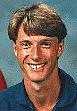
A veteran of three space flights, Foale has logged more than 634 hours in space. He flew as a mission specialist on STS-45 (March 24 to April 2, 1992) the first of the ATLAS series of missions to address the atmosphere and its interaction with the Sun, and again as a mission specialist on STS-56, carrying ATLAS-2, and the SPARTAN retrievable satellite which made observations of the solar corona. Most recently, he served as a mission specialist on STS-63 (February 2-11, 1995), the first rendezvous with the Russian Space Station, Mir. During the flight he made a space walk (extravehicular activity) for 4 hours, 39 minutes, evaluating the effects of extremely cold conditions on his spacesuit, as well as moving the 2800-pound Spartan satellite as part of a mass handling experiment.
Manned seven crew. Carried ATLAS-1 experimental package. Payloads: Atmospheric Laboratory for Applications and Science (ATLAS)-1, Shuttle Solar Backscat-ter Ultraviolet (SSBUV)-4, Getaway Special Experiment G-229, Space Tissue Loss (STL)-1, Radiation Monitoring Equipment (RME)-lIl, Visual Function Tester (VFT)-lI, Cloud Logic To Opti-mize Use of Defense Systems (CLOUDS)-1A, Investigations Into Polymer Membrane Process-ing (IPMP), Shuttle Amateur Radio Experiment (SAREX)-Il, Ultraviolet Plume Instrument (UVPl).
Manned five crew. Carried Atlas-2; deployed and retrieved Spartan 201. Payloads: Atmospheric Laboratory for Applications and Science (ATLAS) 2, Shuttle Solar Backscat-ter Ultraviolet (SSBUV) A, Shuttle Pointed Autonomous Research Tool for Astronomy (SPARTAN) 201 (Solar Wind Generation Experi-ment), Solar Ultraviolet Experiment (SUVE), Commercial Material Dispersion Apparatus (CMIX), Physiological and Anatomical Rodent Experiment (PARE), Hand-held, Earth-oriented, Real-time, Cooperative, User-friendly, Location-targeting, and Environmental System (HER-CULES), Shuttle Amateur Radio Experiment (SAREX) II, Space Tissue Loss (STL), Air Force Maui Optical Site (AMOS), Cosmic Radiation Effects and Activation Monitor (CREAM), Radiation Monitoring Equipment (RME) III.
Deployed ODERACS 2A-2E; deployed and retrieved Spartan 204. Discovery rendezvoused with Russia's space station, Mir, to a distance of 11 m and performed a fly-around, but did not dock with Mir. Payloads: SPACEHAB 03, Shuttle Pointed Autonomous Research Tool for Astronomy (SPARTAN) 204, Cryo Systems Experiment (CSE)/GLO-2 Experi-ment Payload (CGP)/Orbital Debris Radar Calibration Spheres (ODERACS) 2, Solid Surface Combustion Experiment (SSCE), Air Force Maui Optical Site (AMOS), IMAX Cargo Bay Camera (ICBC)
Tested tools and techniques for extravehicular activity.
Atlantis blasted off on a night launch to Mir, docking with the station on May 17 at 02:33 GMT. Jerry Linenger, who had begun his stay on Mir in mid-January aboard STS-81, would return aboard STS-84. Michael Foale would be left at the station for his stint as the American crew member of Mir. The crew transfered to Mir 466 kg of water, 383 kg of U.S. science equipment, 1,251 kg of Russian equipment and supplies, and 178 kg of miscellaneous material. Returned to Earth aboard Atlantis were 406 kg of U.S. science material, 531 kg of Russian logistics material, 14 kg of ESA material and 171 kg of miscellaneous material. Atlantis undocked from Mir at 01:04 GMT on May 22. After passing up its first landing opportunity due to clouds over the landing site, the Shuttle fired its OMS engines on the deorbit burn at 12:33 GMT on May 24. Atlantis landed at 13:27 GMT at Kennedy Space Center's runway 33.
Inspected exterior of Spektr. Moved solar arrays.
Hubble Space Telescope (HST) servicing mission SM-3A, delayed repeatedly by technical problems with the shuttle fleet after the near-disastrous previous launch. Finally launched after the last possible day to avoid Y2K computer problems; one spacewalk was cancelled so that the shuttle could return by December 28. Hubble was in a 591 km x 610 km x 28.5 deg orbit at launch. After separation of the external tank ET-101 the Orbiter was in a 56 km x 587 km x 28.5 deg transfer orbit. The OMS 2 burn at 0134 UTC raised the orbit to 313 km x 582 km. The payload bay contained:
Installed in the Hubble space telescope a new 486/25 mhz computer and replaced Fine Guidance Sensor FGS-2.