| astronautix.com | Culbertson |
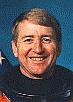
He has logged over 5,000 hours flying time in 40 different types of aircraft, and 350 carrier landings.
On his first mission, Culbertson served as pilot on STS-38. The five-man crew launched at night from the Kennedy Space Center, Florida, on November 15, 1990. During the five-day mission crew members conducted Department of Defense operations. After 80 orbits of the earth, in the first Shuttle recovery in Florida since 1985, Space Shuttle Atlantis and her crew landed back at the Kennedy Space Center on November 20, 1990. Mission duration was 117 hours, 54 minutes, 28 seconds. in space.
More recently, Culbertson commanded the STS-51 mission aboard the Shuttle Discovery, which launched on September 12, 1993. During the ten day mission the crew of five deployed the U.S. Advanced Communications Technology Satellite (ACTS/TOS), and the Shuttle Pallet Satellite (ORFEUS/SPAS) with U.S. and German scientific experiments aboard, including an ultraviolet spectrometer. On flight day five, a seven-hour EVA was conducted to evaluate Hubble Space Telescope repair tools and methods. After the SPAS spacecraft had completed six days of free flight at up to 40 miles from Discovery, the crew completed a successful rendezvous and recovered the SPAS with the Shuttle's robot arm. The mission concluded on September 22, 1993, with the first ever night landing at the Kennedy Space Center. Mission duration was 236 hours, 11 minutes.
Culbertson currently serves as Program Manager, Phase 1 Shuttle/Mir. Phase 1 is a multi-year program, consisting of at least seven Shuttle docking missions to the Russian Space Station Mir, five astronauts spending at least 22 months cumulatively on-board the Mir, and all the associated science and docking hardware to ensure the success of the joint program. Phase 1 will serve as a precursor to the building of the joint International Space Station.
Manned five crew. Deployed a classified payload. Orbits of Earth: 79. Landed at: Runway 33 at Kennedy Space Center, Florida. Landing Speed: 359 kph. Touchdown miss distance: 430.00 m. Landing Rollout: 2,712.00 m. Payloads: DoD Mission.
Deployed and retrieved Orfeus-SPAS. During the EVA conducted tests in support of the Hubble Space Telescope first servicing mission and future EVAs, including Space Station assembly and maintenance. First night landing at KSC. Payloads: Advanced Communication Technology Sat-ellite (ACTS)/Transfer Orbit Stage (TOS), Orbiting Retrievable Far and Extreme Ultraviolet Spectrometer�Shuttle Pallet Satellite (ORFEUS-SPAS) with Remote IMAX Camera System (RICS), Limited Duration Space Environ-ment Candidate Materials Exposure (LDCE) (Beam Configuration C), Commercial Protein Crystal Growth (CPCG Block II), Chromosome and Plant Cell Division in Space (CHROMEX), High Resolution Shuttle Glow Spectroscopy-A (HRSGS-A), Auroral Photography Experiment-B (APE-B), Investigation into Polymer Membrane Processing (IPMP), Radiation Monitoring Equip-ment (RME-III), Air Force Maui Optical Site Cal-ibration Test (AMOS), IMAX In-Cabin Camera.