| astronautix.com | Crippen |
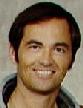
Official NASA Biography - 1981
NAME: Robert L. Crippen (Captain, USN), pilot.
BIRTHPLACE AND DATE: Born in Beaumont, Texas, on Sept. 11, 1937. He grew up in Porter, Texas, where his mother, Mrs. Herbert W. Crippen, now resides.
PHYSICAL DESCRIPTION: Brown hair; brown eyes; height: 5 ft. 10 in.: weight: 160 lb.
EDUCATION: Graduated from New Caney High School, Texas; received a bachelor's degree in aerospace engineering from the University of Texas in 1960.
MARITAL STATUS: Married to the former Virginia E. Hill. Her parents, Mr. and Mrs. James D. Hill, reside in Corpus Christi, Texas.
CHILDREN: Ellen Marie, June 14, 1962; Susan Lynn, Dec. 24, 1964; Linda Ruth, May 10, 1967.
SPECIAL HONORS: Awarded the NASA Exceptional Service Medal and the Johnson Space Center Group Achievement Award (1972).
EXPERIENCE: Crippen received his commission through the Navy's Aviation officer Program at Pensacola, Fla., which he entered after graduation from the University of Texas. He continued his flight training at Whiting Field, Fla., and went from there to Chase Field in Beeville, Texas, where he received his wings.
From June 1962 to November 1964, he was assigned to Fleet Squadron VA-72 -- completing two-and-one-half years of duty as an attack pilot aboard the aircraft carrier USS INDEPENDENCE. He later attended the U.S. Air Force Aerospace Research Pilot School at Edwards Air Force Base, Calif., and, upon graduation, remained there as an instructor until his selection in October 1966 to the USAF Manned orbiting Laboratory Program. Crippen was among the second group of aerospace research pilots to be assigned to the MOL Program.
He has logged more than 4,275 hours flying time, which include more than 4,090 hours in jet aircraft.
NASA EXPERIENCE: Crippen became a NASA astronaut in September 1969. He was a crew member on the highly successful Skylab Medical Experiments Altitude Test (SMEAT) -- a 56-day simulation of the Skylab mission, enabling crewmen to collect medical experiments baseline data and evaluate equipment, operations and procedures.
Crippen was a member of the astronaut support crew for the Skylab 2, 3 and 4 missions, and he served in this same capacity for the Apollo Soyuz Test Project (ASTP) mission which was completed successfully in July 1975.
CURRENT ASSIGNMENT: Crippen has been designated pilot for one of the four two-man crews selected to fly Space Shuttle orbital flight tests and, with John W. Young, will fly STS-1 in 1981.
Planned date of fourth manned MOL mission at time of the program cancellation. From the beginning of the project, the Navy had demanded that this be an all-Navy crew, which would limit the crew to Truly, with either Overmeyer or Crippen as co-pilot.
First flight of Space Transportation System (aka Space Shuttle).. Payloads: Development Flight Instrumentation and Aerodynamic Coefficient Identification Package.
Manned five crew. Deployed Anik C2, Palapa B1; deployed and retrieved SPAS platform. Payloads: Office of Space and Terrestrial Applications (OSTA)-2 experiments, deployment of PALAPA-B1 communications satellite for Indonesia with Payload Assist Module (PAM)-D and Telesat-F communications satellite for Canada with PAM-D, German Shuttle Pallet Satellite (SPAS)-01, seven getaway specials (GAS), Monodisperse Latex Reactor (MLR), Continuous Flow Electrophoresis System (CFES).
Manned five crew. First repair on orbit of a satellite, Solar Maximum Mission, by James van Hoften and George Nelson. Deployed LDEF. Payloads:Solar Maximum Mission (SMM) repair, manned maneuvering unit (MMU) satellite support, deployment of Long-Duration Exposure Facility (LDEF) in earth orbit free drift. LDEF contained 57 experiments and weighed about 10,000 kg. Cinema 360 and IMAX 70-mm cameras.
Manned seven crew. Deployed ERBS; performed high resolution Earth imagery. Payloads: Earth Radiation Budget Satellite (ERBS) deployment, Office of Space and Terrestrial Applications (OSTA)-3 experiments, Large Format Camera (LFC). First use of Orbital Refueling System (ORS) with extravehicular activity (EVA) astronauts, IMAX camera. In response to the American Strategic Defence Initiative and continued military use of the shuttle, the Soviet Union fired a 'warning shot' from the Terra-3 laser complex at Sary Shagan. The facility tracked Challenger with a low power laser on 10 October 1984. This caused malfunctions to on-board equipment and discomfort / temporary blinding of the crew, leading to a US diplomatic protest.
Planned Department of Defense shuttle mission. Cancelled after Challenger disaster. Would have been first launch from the ill-fated SLC-6 launch site at Vandenberg, California.