| astronautix.com | Covey |
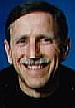
NAME: Richard O. Covey (Colonel, USAF)
NASA Astronaut
BIRTHPLACE AND DATE: Born August 1, 1946, in Fayetteville, Arkansas, but considers Fort Walton Beach, Florida, to be his hometown. His parents, Lt. Col. and Mrs. Charles D. Covey, USAF, are deceased.
PHYSICAL DESCRIPTION: Brown hair; gray eyes; 5 feet 11-1/2 inches; 155 pounds.
EDUCATION: Graduated from Choctawhatchee High School, Shalimar, Florida, in 1964; received a bachelor of science degree in engineering sciences with a major in astronautical engineering from the United States Air Force Academy in 1968, and a master of science degree in aeronautics and astronautics from Purdue University in 1969.
MARITAL STATUS: Married to the former Kathleen Allbaugh of Emmettsburg, Iowa. Her parents, Mr. and Mrs. Eugene B. Allbaugh, are residents of San Jose, California.
CHILDREN: Sarah Suzanne, February 5, 1974; Amy Kathleen, May 18, 1976.
RECREATIONAL INTERESTS: He enjoys golf, water sports, photography, skiing, and volleyball.
ORGANIZATIONS: Member of the Air Force Association, the Order of Daedalians, the USAF Academy Association of Graduates, the Society of Experimental Test Pilots, and the Association of Space Explorers.
SPECIAL HONORS: Awarded the Department of Defense Distinguished Service Medal, the Department of Defense Superior Service Medal, 5 Air Force Distinguished Flying Crosses, 16 Air Medals, the Air Force Meritorious Service Medal, the Air Force Commendation Medal, the NASA Exceptional Service Medal, 3 NASA Space Flight Medals, the Johnson Space Center Certificate of Commendation, the American Institute of Aeronautics and Astronautics Haley Space Flight Award for 1988, and the American Astronautical Society Flight Achievement Award for 1988. He is a Distinguished Graduate of the U.S. Air Force Academy, received the Liethen-Tittle Award as the Outstanding Graduate of USAF Test Pilot School Class 74B, and is a Distinguished Astronaut Engineering Alumnus of Purdue University.
EXPERIENCE: Between 1970 and 1974, Covey was an operational fighter pilot, flying the F-100, A37, and A-7D. He flew 339 combat missions during two tours in Southeast Asia. At Eglin Air Force Base, Florida, between 1975 and 1978, he was an F-4 and A-7D weapons systems test pilot and joint test force director for electronic warfare testing of the F-15 Eagle. He has flown over 5,000 hours in more than 30 different types of aircraft.
NASA EXPERIENCE: Selected as an astronaut candidate by NASA in January 1978, Covey became an astronaut in August 1979. He has flown three space flights -- STS 51-I in 1985, STS-26 IN 1988, and STS-38 in 1990.
Prior to the first flight of the Space Shuttle, he provided astronaut support in Orbiter engineering development and testing. He was a T-38 chase pilot for the second and third Shuttle flights and support crewman for the first operational Shuttle flight, STS-5. Covey also served as Mission Control spacecraft communicator (CAPCOM) for Shuttle missions STS-5, 6, 61-B, 61-C, and 51-L. During 1989, he was Chairman of NASA's Space Flight Safety Panel.
On his first mission, Covey was the pilot of STS-51I, which launched from Kennedy Space Center, Florida, on August 27, 1985. During this seven day mission, crew members deployed three communications satellites, the Navy SYNCOM IV-4, the Australian AUSSAT, and American Satellite Company's ASC-1. The crew also performed the successful on-orbit rendezvous and repair of the ailing 15,000-pound SYNCOM IV-3 satellite. This repair activity involved the first manual grapple and manual deployment of a satellite by a crew member. Mission duration was 170 hours. Space Shuttle Discovery completed 112 orbits of the Earth before landing at Edwards Air Force Base, California, on September 3, 1985.
He then served as pilot on STS-26, the first flight to be flown after the Challenger accident. The five man crew launched from the Kennedy Space Center, Florida, on September 29, 1988 aboard the Space Shuttle Discovery. Mission duration was 97 hours during which crew members successfully deployed the TDRS-C satellite and operated eleven secondary payloads, which included two student experiments. Discovery completed 64 orbits of the earth before landing at Edwards Air Force Base, California, on October 3, 1988.
More recently, Covey was the spacecraft commander on STS-38. The five man crew launched at night from the Kennedy Space Center, Florida, on November 15, 1990. During the five day mission crew members conducted Department of Defense operations. After 80 orbits of the earth, Covey piloted the Space Shuttle Atlantis to a landing on the runway at the Kennedy Space Center on November 20, 1990. This was the first Shuttle recovery in Florida since 1985. With the completion of his third space flight, he has logged over 385 hours in space.
While awaiting assignment to a subsequent space flight, Colonel has served in a variety of management positions within the Astronaut Office and Flight Crew Operations Directorate. He is currently the Acting Deputy Director of Flight Crew Operations and shares management responsibility for the Astronaut Office, Aircraft Operations Division, and supporting offices.
FEBRUARY 1992
Manned five crew. Launched Aussat 1, ASC 1, Leasat 4; repaired Leasat 3. Payloads: Deploy ASC (American Satellite Company)-1 with Payload Assist Modue (PAM)-D. Deploy AUSSAT (Australian communications satellite)-1 with PAM-D. Deploy Syncom IV-4 communications satellite with its unique stage. Retrieve Leasat-3 communications satellite, repair and deploy by extravehicular activity (EVA) astronauts. Physical Vapor Transport Organic Solids (PVTOS) experiment.
Manned five crew. First shuttle reflight after Challenger disaster. Deployed TDRS 3. Payloads: Deploy IUS (lnertial Upper Stage) with Tracking and Data Relay Satellite (TDRS)-C. 3M's Physical Vapor Transport Organics Solids 2 experiment (PVTOS), Automated Directional Solidification Furnace (ADSF), Infrared Communi-cations Flight Experiment (lRCFE), Protein Crystal Growth Il (PCG), Isoelectric Focusing (ISF)-2, Phase Partitioning Experiment (PPE), Aggrega-tion of Red Blood Cells (ARC)-2, Mesoscale Lightning Experiment (MLE)-1, Earth Limb Radiance (ELRAD), Orbiter Experiments (OEX), Autonomous Supporting Instrumentation System (OASlS)-I, two Shuttle Student Involvement Project (SSIP) experiments.
Manned five crew. Deployed a classified payload. Orbits of Earth: 79. Landed at: Runway 33 at Kennedy Space Center, Florida. Landing Speed: 359 kph. Touchdown miss distance: 430.00 m. Landing Rollout: 2,712.00 m. Payloads: DoD Mission.
Manned seven crew. Hubble repair mission. Conducted the most EVAs (5) on a Space Shuttle Flight to that date. Payloads: Hubble Space Telescope (HST) Servicing Mission (SM) 1, IMAX Camera, IMAX Cargo Bay Camera (ICBC), Air Force Maui Optical Site (AMOS).