| astronautix.com | Cooper |
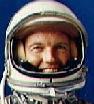
NAME: Leroy Gordon Cooper, Jr., Colonel USAF (Ret.)
NASA Astronaut
BIRTHPLACE: Shawnee, Oklahoma, March 6, 1927
PARENTS: Father - Leroy Gordon Cooper, Sr. - deceased Mother - Hattie Cooper - Resides in Carbondale, Colorado
PHYSICAL DATA: Brown hair, blue eyes, 5 ft. 8 in., 155 lbs.
EDUCATION: Primary and Secondary Schools: Shawnee, Oklahoma; Murray, Kentucky
Colleges: University of Hawaii University of Maryland - European Extension U.S. Air Force Institute of Technology
Advanced Level: Eleven years graduate level training in Space Technology, Space Mechanics, Lunar Geology, Spacecraft Design, Spacecraft Check Out and Flight Testing with NASA
Degrees: B.S.A.E. - Air Force Institute of Technology Dr. of Science - Oklahoma City University
Other Schools: Graduate of U.S.A.F. Jet Pilot School, Graduate of U.S. Navy Underwater Demolition Team School, Graduate of U.S.N. Helicopter School
HOBBIES: Treasure hunting, archeology, racing, flying, skiing, boating, hunting, fishing
ORGANIZATIONS: The Society of Experimental Test Pilots, The American Institute of Aeronautics and Astronautics The American Astronautical Society, The Blue Lodge Masons, The York Rite Masons, The Scottish Rite Masons, The Royal Order of Jesters, The Sojourners, The Rotary Club, The Daedalians, The Confederate Air Force, The Boy Scouts of America, The Girl Scouts of America.
AWARDS AND TROPHIES: The Air Force Legion of Merit, The Air Force Distinguished Flying Cross, The Air Force Distinguished Flying Cross Cluster, The NASA Exceptional Service Medal, The NASA Distinguished Service Medal, USAF Command Astronaut Wings, The Collier Trophy, The Harmon Trophy, The Scottish Rite 33o, The York Rite Knight of the Purple Cross, The DeMolay Legion of Honor, The John F. Kennedy Trophy, The Ivan E. Kincheloe Trophy, The Air Force Association Trophy, The Primus Trophy, The John Montgomery Trophy, The General Thomas E. White Trophy, The Association of Aviation Writers Award, The University of Hawaii Regents Medal, The Columbus Medal, The Silver Antelope, and The Sport Fishing Society of Spain Award,
RECORDS AND FIRSTS:
1963 - Flew 22 orbits (solo) in Mercury 9 (Faith 7) 1963 - Gave one of the opening addresses to the first meeting of the League of African Nations (from Space) 1963 - Used the first television camera in Space 1963 - First pilot-controlled re-entry from Space 1963-1965 - First Military man to address the Joint Sessions of Congress twice 1965 - Flew 122 orbits as command pilot of Gemini 5 1965 - First man to fly two orbital flights 1965 - First man to fly a fuel cell in Space 1965 - First man to fly a radar set in Space 1965 - First man to track a typhoon from Space 1965 - Established the World Record of most hours in Space for the United States 1965 - National Aeronautic Association Record Distance in Earth orbit 1965 - National Aeronautic Association Record Duration in Earth orbit
FLYING EXPERIENCE: 7000 hours total time; 4000 hours jet time; Flies all types of commercial and general aviation airplane and helicopters.
MILITARY EXPERIENCE:
1945-1946 - United States Marine Corps.
1946-1949 - Attended the University of Hawaii - obtained commission
1949 - Called to active duty USAF (for pilot training)
1950-1954 - Fighter pilot with 86th Fighter-Bomber group in Germany
1954-1956 - Attended the Air Force Institute of Technology 1956-1957 - Attended the USAF Experimental Flight Test School 1957-1959 - Served as Experimental Flight Test Engineer and Flight Test Pilot at the Air Force Flight Test Center at Edwards AFB, California
1959 - Selected in First Group of Seven Astronauts for the NASA Mercury Program
May 15-16, 1963 - Command Pilot on MA9 - "Faith 7"
August 21-28, 1965 - Command Pilot on Gemini 5
October 1965 - October 1966 - Served as Back-up Command Pilot on Gemini 12
April 1968 - April 1969 - Served as Back-up Command Pilot on Apollo 10
July 31, 1970 - Retired from the Air Force and the Space Program
MILITARY TECHNICAL AND MANAGEMENT EXPERIENCE:
1956-1959 - Experimental Flight Engineer and Test Pilot at the Air Force Flight Test Center. Served as Project Manager on several flight development projects. Helped to develop new techniques of flight testing and new aircraft stability parameters.
1950-1970 - In addition to training for Space Flight, has had extensive experience in test project management from the drawing board to the flight test phase of check out and qualification for various major systems of the Space Program.
BUSINESS TECHNICAL AND MANAGEMENT EXPERIENCE:
1962-1967 - Performance Unlimited, Inc. - President - Manufactured race engines, fiberglass boats, distributed marine engines and products, raced high performance boats.
1963-1967 - GCR, Inc. - President - Designed, tested and raced championship cars at Indianapolis and other USAC tracks, conducted tire tests for Firestone Tire and Rubber Company, pioneered turbine engine installation on cars.
1965-1970 - Teletest, Inc. - President - Designed, installed and tested various systems using advanced Telemetry.
1966-1969 - Doubloon, Inc. - Participated with Doubloon Inc. on design, construction, and utilization of new types of Treasure Hunting equipment.
1968-1969 - Cosmos, Inc. - Participated with Cosmos, Inc. on Archeology exploration projects.
1968-1970 - Profile Race Team - Part owner and race project manager, designed constructed and raced high performance boats.
1968-1970 - Republic Corp. Technical Consultant - Technical consultant for corporate acquisitions and public relations.
1967-1969 - Thompson Industries Technical Consultant - Technical Consultant for design and construction of various automotive production items for General Motors, Ford and Chrysler Motor Companies.
1970-1972 - Canaveral International, Inc. - Member of Board of Directors and Technical Consultant for developing technical products, public relations in land development projects.
1970 -Present - Gordon Cooper & Associates, Inc. - President for consultant firm specializing technical projects from airline and aerospace fields to land and hotel development projects.
1970-1974 - APECO - Board of Director for corporation which produces and markets modular homes, computer systems, office systems, copy machines and boats and marine equipment.
July 1972-June 1973 - Campco - Member of Board of Directors and Technical consultant for corporation which builds campers and mobile homes.
August 1972-December 1973 - LowCom Systems, Inc. - Board of Directors and Technical Consultant for design and production of various advanced electronic systems.
1972-1973 - Aerofoil Systems, Inc. - Board of Directors and Technical Consultant for design and construction of lifting, inflatable, steerable foils which could land cargo and/or personnel at a precise spot.
July 1973-January 1974 - Craftech Construction, Inc. - Vice President and member of the Board of Directors - Design and construction of economical homes, garages, storage buildings, and hangars of Craftboard and fiberglass.
January 1973-Present - Constant Energy Systems, Inc. - Development of a large energy system to use for metropolitan power and ship engines without use of petrochemicals. Development and sales of improvements to automotive engines to increase their efficiency.
1975 Became Vice President for Research and Development for Walter E. Disney Enterprises, Inc., the research and development subsidiary of Walt Disney Productions. Located in Glendale, California.
Currently President, XL, Inc., Beverly Hills, California.
NOVEMBER, 1989
The Sigma 7 spacecraft with Astronaut Walter M. Schirra, Jr., as pilot was launched into orbit by a Mercury-Atlas vehicle from Atlantic Missile Range. In the most successful American manned space flight to date, Schirra traveled nearly six orbits, returning to earth at a predetermined point in the Pacific Ocean 9 hours, 13 minutes after liftoff. Within 40 minutes after landing, he and his spacecraft were safely aboard the aircraft carrier U.S.S. Kearsarge. Schirra attempted and achieved a nearly perfect mission by sticking rigorously to mission plan.
Final Mercury mission, Faith 7, was piloted by Astronaut L. Gordon Cooper, Jr. After 22 orbits, virtually all spacecraft systems had failed, and Cooper manually fired the retrorockets and the spacecraft reentered the atmosphere, landing safely in the Pacific Ocean 34 hours, 19 minutes, and 49 seconds after liftoff. Cooper was reported in good condition, and this turned out to be the final Mercury flight.
Major objectives of the eight-day mission were evaluating the performance of the rendezvous guidance and navigation system, using a rendezvous evaluation pod (REP), and evaluating the effects of prolonged exposure to the space environment on the flight crew. Secondary objectives included demonstrating controlled reentry guidance, evaluating fuel cell performance, demonstrating all phases of guidance and control system operation needed for a rendezvous mission, evaluating the capability of either pilot to maneuver the spacecraft in orbit to rendezvous, evaluating the performance of rendezvous radar, and executing 17 experiments. The mission proceeded without incident through the first two orbits and the ejection of the REP. About 36 minutes after beginning evaluation of the rendezvous guidance and navigation system, the crew noted that the pressure in the oxygen supply tank of the fuel cell system was falling. Pressure dropped from 850 pounds per square inch absolute (psia) at 26 minutes into the flight until it stabilized at 70 psia at 4 hours 22 minutes, and gradually increased through the remainder of the mission. The spacecraft was powered down and the REP exercise was abandoned. By the seventh revolution, experts on the ground had analyzed the problem and a powering-up procedure was started. During the remainder of the mission the flight plan was continuously scheduled in real time. Four rendezvous radar tests were conducted during the mission, the first in revolution 14 on the second day; the spacecraft rendezvous radar successfully tracked a transponder on the ground at Cape Kennedy. During the third day, a simulated Agena rendezvous was conducted at full electrical load. The simulation comprised four maneuvers - apogee adjust, phase adjust, plane change, and coelliptical maneuver - using the orbit attitude and maneuver system (OAMS). Main activities through the fourth day of the mission concerned operations and experiments. During the fifth day, OAMS operation became sluggish and thruster No. 7 inoperative. Thruster No. 8 went out the next day, and the rest of the system was gradually becoming more erratic. Limited experimental and operational activities continued through the remainder of the mission. Retrofire was initiated in the 121st revolution during the eighth day of the mission, one revolution early because of threatening weather in the planned recovery area. Reentry and landing were satisfactory, but the landing point was 145 km short, the result of incorrect navigation coordinates transmitted to the spacecraft computer from the ground network. Landing occurred August 29, 190 hours 55 minutes after the mission had begun. The astronauts arrived on board the prime recovery ship, the aircraft carrier Lake Champlain, at 9:25. The spacecraft was recovered at 11:51 a.m.
With this flight, the US finally took the manned spaceflight endurance record from Russia, while demonstrating that the crew could survive in zero gravity for the length of time required for a lunar mission. However the mission was incredibly boring, the spacecraft just drifting to conserve fuel most of the time, and was 'just about the hardest thing I've ever done' according to a hyperactive Pete Conrad. An accident with freeze dried shrimp resulted in the cabin being filled with little pink subsatellites.
Two very serious astronauts get it all right to end the program. Docked and redocked with Agena, demonstrating various Apollo scenarios including manual rendezvous and docking without assistance from ground control. Aldrin finally demonstrates ability to accomplish EVA without overloading suit by use of suitable restraints and careful movement.
Major objectives of the mission were to rendezvous and dock and to evaluate extravehicular activities (EVA). Among the secondary objectives were tethered vehicle evaluation, experiments, third revolution rendezvous and docking, automatic reentry demonstration, docked maneuvering for a high-apogee excursion, docking practice, systems tests, and Gemini Agena target vehicle (GATV) parking. The high-apogee excursion was not attempted because an anomaly was noted in the GATV primary propulsion system during insertion, and parking was not attempted because the GATV's attitude control gas was depleted. All other objectives were achieved. Nine spacecraft maneuvers effected rendezvous with the GATV. The onboard radar malfunctioned before the terminal phase initiate maneuver, but the crew used onboard backup procedures to calculate the maneuvers. Rendezvous was achieved at 3 hours 46 minutes ground elapsed time, docking 28 minutes later. Two phasing maneuvers, using the GATV secondary propulsion system, were accomplished, but the primary propulsion system was not used. The first of two periods of standup EVA began at 19 hours 29 minutes into the flight and lasted for 2 hours 29 minutes. During a more than two-hour umbilical EVA which began at 42 hours 48 minutes, Aldrin attached a 100-foot tether from the GATV to the spacecraft docking bar. He spent part of the period at the spacecraft adapter, evaluating various restraint systems and performing various basic tasks. The second standup EVA lasted 55 minutes, ending at 67 hours 1 minute ground elapsed time. The tether evaluation began at 47 hours 23 minutes after liftoff, with the crew undocking from the GATV. The tether tended to remain slack, although the crew believed that the two vehicles did slowly attain gravity-gradient stabilization. The crew jettisoned the docking bar and released the tether at 51 hours 51 minutes. Several spacecraft systems suffered problems during the flight. Two fuel cell stacks failed and had to be shut down, while two others experienced significant loss of power. At 39 hours 30 minutes ground elapsed time, the crew reported that little or no thrust was available from two orbit attitude and maneuver thrusters. Retrofire occurred 94 hours after liftoff. Reentry was automatically controlled. The spacecraft landed less than 5 km from the planned landing point on November 15. The crew was picked up by helicopter and deposited 28 minutes later on the deck of the prime recovery ship, the aircraft carrier Wasp. The spacecraft was recovered 67 minutes after landing.
Final dress rehearsal in lunar orbit for landing on moon. LM separated and descended to 10 km from surface of moon but did not land. Apollo 10 (AS-505) - with crew members Thomas P. Stafford, Eugene A. Cernan, and John W. Young aboard - lifted off from Pad B, Launch Complex 39, KSC, at 12:49 p.m. EDT on the first lunar orbital mission with complete spacecraft. The Saturn V's S-IVB stage and the spacecraft were inserted into an earth parking orbit of 189.9 by 184.4 kilometers while the onboard systems were checked. The S-IVB engine was then ignited at 3:19 p.m. EDT to place the spacecraft in a trajectory toward the moon. One-half hour later the CSM separated from the S-IVB, transposed, and docked with the lunar module. At 4:29 p.m. the docked spacecraft were ejected, a separation maneuver was performed, and the S-IVB was placed in a solar orbit by venting residual propellants. TV coverage of docking procedures was transmitted to the Goldstone, Calif., tracking station for worldwide, commercial viewing.
On May 19 the crew elected not to make the first of a series of midcourse maneuvers. A second preplanned midcourse correction that adjusted the trajectory to coincide with a July lunar landing trajectory was executed at 3:19 p.m. The maneuver was so accurate that preplanned third and fourth midcourse corrections were canceled. During the translunar coast, five color TV transmissions totaling 72 minutes were made of the spacecraft and the earth.
At 4:49 p.m. EDT on May 21 the spacecraft was inserted into a lunar orbit of 110.4 by 315.5 kilometers. After two revolutions of tracking and ground updates, a maneuver circularized the orbit at 109.1 by 113.9 kilometers. Astronaut Cernan then entered the LM, checked all systems, and returned to the CM for the scheduled sleep period.
On May 22 activation of the lunar module systems began at 11:49 a.m. EDT. At 2:04 p.m. the spacecraft were undocked and at 4:34 p.m. the LM was inserted into a descent orbit. One hour later the LM made a low-level pass at an altitude of 15.4 kilometers over the planned site for the first lunar landing. The test included a test of the landing radar, visual observation of lunar lighting, stereo photography of the moon, and execution of a phasing maneuver using the descent engine. The lunar module returned to dock successfully with the CSM following the eight-hour separation, and the LM crew returned to the CSM.
The LM ascent stage was jettisoned, its batteries were burned to depletion, and it was placed in a solar orbit on May 23. The crew then prepared for the return trip to earth and after 61.5 hours in lunar orbit a service propulsion system TEI burn injected the CSM into a trajectory toward the earth. During the return trip the astronauts made star-lunar landmark sightings, star-earth horizon navigation sightings, and live television transmissions.
Apollo 10 splashed down in the Pacific at 12:52 p.m. EDT on May 26, 5.4 kilometers from the recovery ship. The crew was picked up and reached the recovery ship U.S.S. Princeton at 1:31 p.m. All primary mission objectives of evaluating performance and support and the detailed test objectives were achieved.