| astronautix.com | Chiao |
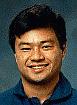
Selected by NASA in January 1990, Dr. Chiao became an astronaut in July 1991. He is qualified for assignment as a mission specialist on future Space Shuttle flight crews. His technical assignments to date include: Space Shuttle flight software verification in the Shuttle Avionics Integration Laboratory (SAIL); crew equipment, Spacelab, Spacehab and payloads issues for the Astronaut Office Mission Development Branch; Training and Flight Data File issues. A veteran of two space flights, he flew as a mission specialist on STS-65 in 1994 and STS-72 in 1996. Dr. Chiao has logged 567 hours, 55 minutes, 41 seconds in space, including two spacewalks totaling just over 13 hours.
On STS-65, his first flight, the seven-member crew aboard Space Shuttle Columbia launched from Kennedy Space Center in Florida on July 8, 1994, and returned there on July 23, 1994, setting a new flight duration record for the Space Shuttle program at that time. The STS-65 mission flew the second International Microgravity Laboratory (IML-2). During the 15-day flight the crew conducted more than 80 experiments focusing on materials and life sciences research in microgravity. The mission was accomplished in 236 orbits of the Earth, traveling 6.1 million miles in 353 hours and 55 minutes.
Most recently, Dr. Chiao flew on STS-72 (January 11-20, 1996). During the 9-day flight the crew aboard Endeavour retrieved the Space Flyer Unit (launched from Japan 10-months earlier), and deployed and retrieved the OAST-Flyer. Dr. Chiao performed two spacewalks designed to demonstrate and evaluate techniques to be used in the assembly of the International Space Station. In completing his second space flight, Dr. Chiao orbited the Earth 142 times, traveled 3.7 million miles, and logged a total of 214 hours and 41 seconds in space, including just over 13 EVA hours.
Carried IML-2; microgravity, biology experiments. Payloads: International Microgravity Laboratory (IML) 2, Orbital Acceleration Research Experiment (OARE), Commercial Protein Crystal Growth (CPCG), Air Force Maui Optical Site (AMOS), Military Applications of Ship Tracks (MAST), Shuttle Amateur Radio Experiment (SAREX).
Deployed and retrieved OAST Flyer; retrieved SFU Space Flyer Unit. Beside the two satellite retrievals, the mission included two spacewalks.
Tested tools and techniques for extravehicular activity.
Tested tools and techniques for extravehicular activity.
STS-92 was a space station assembly flight to bring the Z-1 Truss (mounted on a Spacelab pallet), Control Moment Gyros, Pressurised Mating Adapter-3 (PMA-3) and two DDCU (Heat pipes) to the International Space Station.
The RSRM-76 solid rocket boosters separated at 23:19 GMT and main engine cut-off (MECO) came at 23:25 GMT. External tank ET-104 separated into a 74 x 323 km x 51.6 deg orbit. At apogee at 00:01 GMT on Oct 12, Discovery's OMS engines fired to raise perigee to a 158 x 322 km x 51.6 deg orbit; ET-104 re-entered over the Pacific around 00:30 GMT. At Oct 12 on 03:01 GMT the NC1 burn raised the orbit to 180 x 349 km; NC3 on Oct 12 to 311 x 375 km; and the TI burn at 14:09 GMT on Oct 13 to 375 x 381 km x 51.6 deg. Discovery's rendezvous with the International Space Station came at 15:39 GMT on Oct 13, with docking at 17:45 GMT. The spaceship docked with PMA-2, the docking port on the +Y port of the Space Station's Unity module. Hatch was open to PMA-2 at 20:30 GMT the same day.
STS-92 Cargo Manifest
Total payload bay cargo: ca. 14,800 kg
The Z1 first segment of the space station truss was built by Boeing/Canoga Park and was 3.5 x 4.5 meters in size. It was attached to the +Z port on Unity. Z1 carried the control moment gyros, the S-band antenna, and the Ku-band antenna.
PMA-3, built by Boeing/Huntington Beach, was docked to the -Z port opposite Z1. PMA-3 was installed on a Spacelab pallet for launch.
On October 14 at 16:15 GMT the Z1 segment was unberthed from the payload bay and at around 18:20 GMT it was docked to the zenith port on the Unity module.
On October 15 at 14:20 GMT the ODS airlock was depressurised, beginning a spacewalk by Bill McArthur and Leroy Chiao. Official NASA EVA duration (battery power to repress) was 6 hours 28 minutes.
The second spacewalk was on October 16, with Jeff Wisoff and Mike Lopez-Alegria. The suits went to battery power at 14:15 GMT and Wisoff left the airlock at 14:21 GMT. Repressurisation began at 21:22 GMT for a duration of 7 hours 07minutes.
Leroy Chiao and Bill McArthur began the third STS-92 EVA at 15:30 GMT on October 17, completing their work at 22:18 GMT for a total time of 6 hours 48 minutes.
After the spacewalk, Discovery completed the second of the three station reboosts scheduled for STS-92. They fired reaction control system jets in a series of pulses of 1.4 seconds each, over a 30-minute period, gently raising the station's orbit by about 3.1 km.
The last of four successful spacewalks began on 18 October at 16:00 GMT and ended at 22:56 GMT, lasting 6 hours and 56 minutes. Jeff Wisoff and Mike Lopez-Alegria each jetted slowly through space above Discovery's cargo bay.
After the space walk, Discovery completed the third and final reboost of the space station.
On 19 October the astronauts worked within the ISS. They completed connections for the newly installed Z1 external framework structure and transferred equipment and supplies for the Expedition One first resident crew of the Station. The crew also tested the four 290-kg gyroscopes in the truss, called Control Moment Gyros, which will be used to orient the ISS as it orbits the Earth. They will ultimately assume attitude control of the ISS following the arrival of the U.S. Laboratory Destiny. The tests and the transfer of supplies into the Russian Zarya Module took longer than expected. As a result, the crew's final departure from the Station's Unity module was delayed. Melroy and Wisoff took samples from surfaces in Zarya to study the module's environment. They then unclogged the solid waste disposal system in the Shuttle's toilet, which was restored to full operation after a brief interruption in service.
Discovery undocked from the ISS at 16:08 GMT on 20 October. The final separation burn was executed about 45 minutes after undocking. The crew had added 9 tonnes to the station's mass, bringing it to about 72 tonnes. The return to earth, planned for 22 October, was delayed repeatedly due to high winds at the Kennedy landing site. The landing was finally made at Edwards Air Force Base, California, on October 24, at 22:00 GMT.
The astronauts connected cables between Z1 and Unity, relocated the SASA S-band antenna on Z1, and deployed Z1's SGANT Ku-band antenna. They then took the port ETSD (EVA stowage) box from the Spacelab pallet and installed it on Z1.
The astronauts installed two 58 kg DDCU DC-to-DC converter units atop the International Space Station's Z1 Truss. The DDCUs, will convert electricity generated by the solar arrays to be attached during the next shuttle mission. The spacewalkers also completed power cable connections on both the Z1 truss and newly installed docking port, PMA-3. They connected and reconfigured cables to route power from Pressurised Mating Adapter-2 to PMA-3 for the arrival of Endeavour and the STS-97 crew next month. They also attached a second tool storage box on the Z1 truss, providing a place to hold the tools and spacewalking aids for future assembly flights. McArthur stocked the boxes with tools and hardware that had been attached to the Unity module. STS-96 Astronauts Tammy Jernigan and Dan Barry had left the tools on the outside of Unity during a May 1999 spacewalk.