| astronautix.com | Casper |
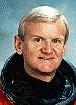
STS-36 launched from the Kennedy Space Center, Florida, on February 28, 1990, aboard Space Shuttle Atlantis. This mission carried classified Department of Defense payloads and was unique in flying at 62 degrees inclination, the highest inclination flown to date by the U.S. manned space program. After 72 orbits of the Earth, the STS-36 mission concluded with a lakebed landing at Edwards Air Force Base, California, on March 4, 1990, after traveling 1.87 million miles. Mission duration was 106 hours, 19 minutes, 43 seconds.
STS-54 launched from the Kennedy Space Center, Florida, on January 13, 1993, aboard Space Shuttle Endeavour. A crew of five successfully accomplished the primary objectives of this six-day mission. A $200 million NASA Tracking and Data Relay Satellite (TDRS-F) satellite was deployed, joining four others to complete a national communications network supporting Space Shuttle and other low-Earth orbit scientific satellites. A Diffuse X-Ray Spectrometer (DXS), carried in the payload bay, collected over 80,000 seconds of quality X-ray data to enable investigators to answer questions about the origin of X-rays in the Milky Way galaxy. A highly successful extravehicular activity (EVA) resulted in many lessons learned that will benefit the International Space Station assembly. The flight was also the first to shut down and restart a fuel cell in flight, successfully demonstrating another Space Station application. Casper landed Endeavour at the Kennedy Space Center on January 19, 1993, after 96 Earth orbits covering over 2.5 million miles. Mission duration was 143 hours and 38 minutes.
STS-62 (March 4-18, 1994) was a two-week microgravity research mission aboard Space Shuttle Columbia. Primary payloads were the United States Microgravity Payload (USMP-2) and the Office of Aeronautics and Space Technology (OAST-2) payloads. These payloads included experiments to understand the process of semiconductor crystal growth, investigating the process of metal alloys as they solidify, studying materials at their critical point (where they exist as both a liquid and gas), and testing new technology for use on future spacecraft, such as advanced solar arrays, radiators, heat sinks, and radiation shielding. The flight also tested new technology for aligning the Remote Manipulator System arm and for grasping payloads with a new magnetic end effector. Columbia flew at a record low altitude of 195 km (105 nautical miles) to gather data on spacecraft glow and erosion caused by atomic oxygen and nitrogen molecules. Casper landed Columbia at the Kennedy Space Center after 224 Earth orbits and 5.82 million miles.
STS-77 (May 19-29, 1996) was a ten-day mission aboard Space Shuttle Endeavour. The crew performed a record number of rendezvous sequences (one with a SPARTAN satellite and three with a deployed Satellite Test Unit) and approximately 21 hours of formation flying in close proximity of the satellites. During the flight the crew also conducted 12 materials processing, fluid physics and biotechnology experiments in a Spacehab Module. STS-77 deployed and retrieved a SPARTAN satellite, which carried the Inflatable Antenna Experiment designed to test the concept of large, inflatable space structures. A small Satellite Test Unit was also deployed to test the concept of self-stabilization by using aerodynamic forces and magnetic damping. Casper brought Endeavour back to Earth at the Kennedy Space Center after 160 Earth orbits and 4.1 million miles. Mission duration was 240 hours and 39 minutes.
Casper presently serves as the Director of Safety, Reliability, and Quality Assurance for the Johnson Space Center.
Manned five crew. Deployed a classified payload. Landed at: Runway 23 dry lake bed at Edwards Air Force Base, . Landing Speed: 368 kph. Touchdown miss distance: 494.00 m. Landing Rollout: 2,407.00 m. Payloads: DoD Mission - Record altitude (through 5/93).
Manned five crew. Deployed TDRSS 6. Payloads: Tracking and Data Relay Satellite (TDRS)-F/Inertial Upper Stage (IUS); Diffuse X-ray Spectrometer (DXS); Chromosome and Plant Cell Division in Space (CHROMEX); Commercial Generic Bioprocessing Apparatus (CGBA) A; Physiological and Anatomical Rodent Experiment (PARE) 02; Solid Surface Combustion Experiment (SSCE).
Carried USMP-2, OAST-2, SAMPIE, TES, EISG. Payloads: United States Microgravity Payload (USMP) 2, Office of Aeronautics and Space Technology (OAST) 2, Dexterous End Effector (DEE), Shuttle Solar Backscatter Ultraviolet/A (SSBUV/A), Limited-Duration Space Environment Candidate Material Exposure (LDCE), Advanced Protein Crystal Growth (APCG), Physiological Systems Experiment (PSE), Commercial Protein Crystal Growth (CPCG), Commercial Generic Bioprocessing Apparatus (CGBA), Auroral Photography Experiment Phase B (APE-B), Middeck Zero-Gravity Dynamics Experiment (MODE), Air Force Maui Optical Site (AMOS) Calibration Test, Bioreactor Demonstration System A.
Deployed and retrieved Spartan 2; deployed PAMS-STU; carried Spacehab module. Payloads: Shuttle Pointed Research Tool for Astronomy (SPARTAN) 207/Inflatable Antenna Experiment (IAE); Technology Experiments Advancing Missions in Space (TEAMS) 01 (includes Vented Tank Resupply Experiment (VTRE), Global Positioning System (GPS) Attitude and Navigation Experiment (GANE) (RME 1316), Liquid Metal Test Experiment (LMTE) and Passive Aerodynami-cally Stabilized Magnetically Damped Satellite (PAMS) Satellite Test Unit (STU); SPACEHAB-4; Brilliant Eyes Ten-Kelvin Sorption Cryocooler Experiment (BETSCE); 12 getaway specials attached to a GAS bridge assembly (GAS 056, 063, 142, 144, 163, 200, 490, 564, 565, 703, 741 and the Reduced-Fill Tank Pressure Control Experiment (RFTPCE); Aquatic Research Facility (ARF) 01; Biological Research in Canisters (BRIC) 07, Block III.