| astronautix.com | Cameron |
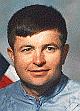
He has logged over 4,000 hours flying time in 48 different types of aircraft.
Cameron flew his first mission as pilot on STS-37. This mission was launched on April 5, 1991, and featured the deployment of the Gamma Ray Observatory for the purpose of exploring gamma ray sources throughout the universe. Atlantis landed on April 11, 1991. On his second mission he was spacecraft commander on STS-56, carrying ATLAS-2. During this nine-day mission the crew of Discovery conducted atmospheric and solar studies in order to better understand the effect of solar activity on the Earth's climate and environment, and deployed and retrieved the autonomous observatory Spartan. STS-56 launched on April 8, 1993, and landed at Kennedy Space Center on April 17, 1993. Most recently, Cameron commanded STS-74, NASA's second Space Shuttle mission to rendezvous and dock with the Russian Space Station Mir, and the first mission to use the Shuttle to assemble a module and attach it to a Space Station. STS-74 launched on November 12, 1995, and landed at Kennedy Space Center on November 20, 1995.
Cameron will leave NASA on August 5 to join Hughes Training, Inc., as Executive Director, Houston Operations.
Manned five crew. Unscheduled EVA to manually deploy the Gamma-Ray Observatory's high-gain antenna, which failed to deploy upon ground command. Payloads: Gamma-Ray Observatory (GRO), Crew/ Equipment Translation Aids (part of Extravehicular Activity Development Flight Experiment), Ascent Particle Monitor (APM), Bioserve Instrumentation Technology Associates Materials Dispersion Apparatus (BlMDA), Protein Crystal Growth (PCG)-Block Il, Space Station Heatpipe Advanced Radiator Element (SHARE)-ll, Shuttle Amateur Radio Experiment (SAREX)-ll, Radiation Monitoring Equipment (RME)-lIl, Air Force Maui Optical Site (AMOS) Calibration Test.
Manned five crew. Carried Atlas-2; deployed and retrieved Spartan 201. Payloads: Atmospheric Laboratory for Applications and Science (ATLAS) 2, Shuttle Solar Backscat-ter Ultraviolet (SSBUV) A, Shuttle Pointed Autonomous Research Tool for Astronomy (SPARTAN) 201 (Solar Wind Generation Experi-ment), Solar Ultraviolet Experiment (SUVE), Commercial Material Dispersion Apparatus (CMIX), Physiological and Anatomical Rodent Experiment (PARE), Hand-held, Earth-oriented, Real-time, Cooperative, User-friendly, Location-targeting, and Environmental System (HER-CULES), Shuttle Amateur Radio Experiment (SAREX) II, Space Tissue Loss (STL), Air Force Maui Optical Site (AMOS), Cosmic Radiation Effects and Activation Monitor (CREAM), Radiation Monitoring Equipment (RME) III.
Rendezvoused and docked with Mir space station on November 15. Delivered the Russian-built 316GK Shuttle-Mir docking module to Mir.Payloads: Shuttle-Mir Mission 2; docking module with two attached solar arrays; IMAX Cargo Bay Camera (ICBC); Glow Experiment (GLO-4)/ Photogrammetric Appendage Structural Dynamics Experiment (PASDE) Payload (GPP); Shuttle Amateur Radio Experiment (SAREX) II.